
In the evolving landscape of mathematics education, understanding core algebraic principles remains crucial for students and professionals alike. Among these is the subtraction property of equality, a fundamental rule that ensures the balance of equations by allowing the same value to be subtracted from both sides without disturbing equality. This property underpins much of algebraic manipulation, facilitating the simplification and solution of equations. As of 2026, with greater emphasis on STEM education and quantitative literacy, mastering such concepts is more important than ever for academic success and practical problem-solving.
At its essence, the subtraction property of equality revolves around the idea that equations represent a balance, similar to a scale. When the same amount is removed from both sides, the scale remains balanced, preserving the truth of the equation. This property, closely related to the addition property of equality, is a gateway for introducing students and learners to the method of variable isolation, which is indispensable for solving linear equations and more complex algebraic problems.
Education platforms and resources continually highlight the importance of properties of equality in developing algebraic fluency. Understanding these not only empowers learners to confidently solve equations but also enhances logical thinking skills and prepares them for advanced mathematics. By exploring practical examples and step-by-step applications of the subtraction property, students can demystify algebraic processes and build a strong foundation for further study.
In brief, the subtraction property of equality allows:
- Maintaining equation balance by subtracting the same value on both sides.
- Simplification of algebraic expressions for easier equation solving.
- Effective variable isolation by undoing additions through inverse operations.
- A stepping stone towards understanding more complex mathematical properties.
- Application in real-world problem solving, enhancing quantitative reasoning.
Exploring the Core Definition and Formula of the Subtraction Property of Equality
The subtraction property of equality is a mathematical rule stating that if two quantities are equal, then subtracting the same number from both preserves that equality. Formally, this can be expressed as: if a = b, then a – c = b – c, where a, b, and c are real numbers.
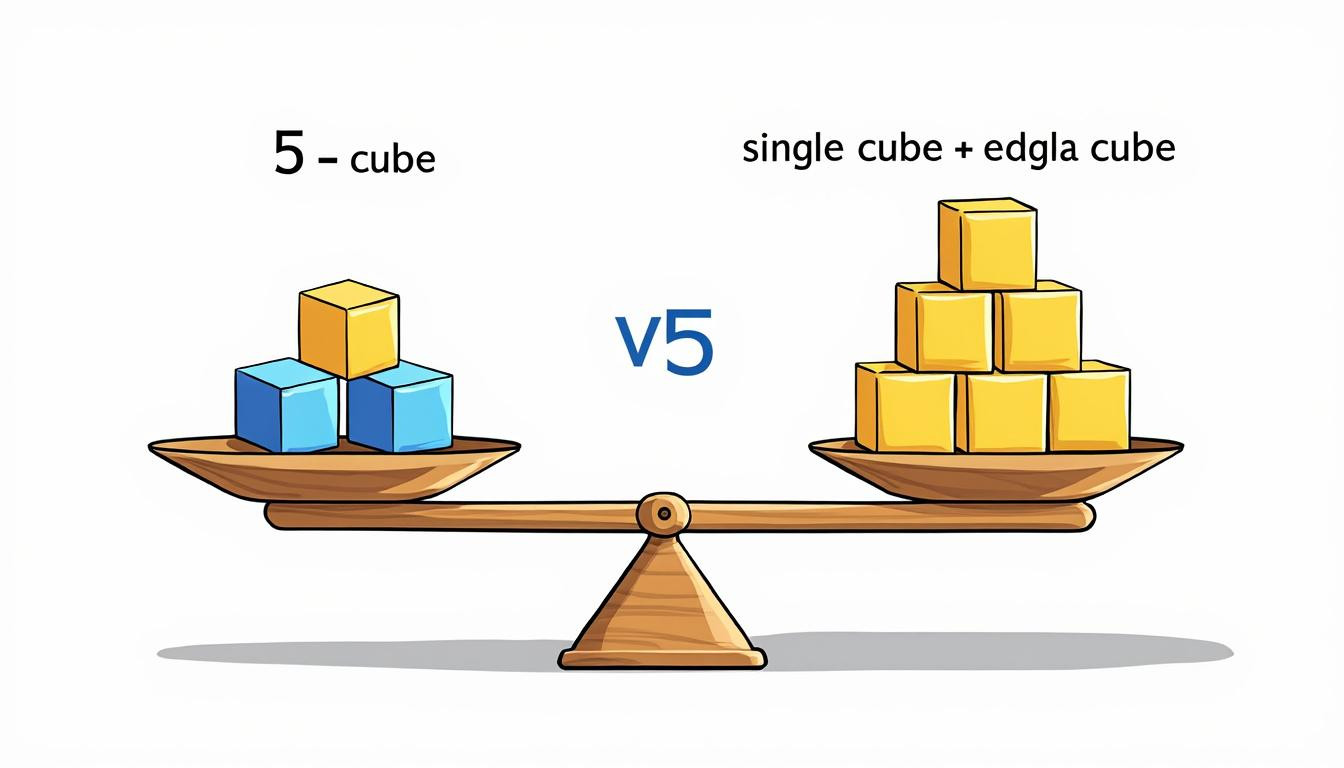
To visualize this concept, imagine a balanced scale with five cubes on each side. Removing two cubes from only one side would tip the scale, disrupting equality. However, when two cubes are taken from both sides, the balance is maintained. This visualization is foundational for understanding how the equal sign operates not merely as a symbol but as a representation of equivalence or balance in algebraic terms.
In practical algebraic manipulation, this property allows us to simplify equations or isolate variables by subtracting identical values simultaneously on both sides to maintain the validity of the equation. For instance, given the equation x + 7 = 18, applying the subtraction property of equality involves subtracting 7 from both sides: x + 7 – 7 = 18 – 7, resulting in x = 11. This step is critical in the process of solving linear equations and is part of the broader technique known as the balance method.
Many online educational resources elaborate on this principle extensively. For example, an intuitive breakdown can be found with supportive exercises at Cuemath’s overview or more comprehensive articles that cover its formula and applications at Helping With Math. These sources show how the subtraction property interrelates with other algebraic properties, enhancing a holistic understanding of equation solving.
Practical Applications of the Subtraction Property in Equation Solving and Variable Isolation
One of the major utilities of the subtraction property of equality lies in its role in simplifying equations and isolating variables. The process of equation solving often involves manipulating expressions so that the variable stands alone on one side. This is frequently achieved by adding or subtracting terms through inverse operations.
Take for example the equation x + 15 = 20. By subtracting 15 from both sides, the equation simplifies neatly: x + 15 – 15 = 20 – 15 leading to x = 5. This is a straightforward illustration of how algebraic manipulation aids in reaching the solution. The subtraction property is the key that unlocks this operational step, ensuring the equality remains intact while focusing on isolating the variable.
Let’s also consider equations involving combined terms, such as 3x – 2x + 6 = 18. First, we simplify like terms on the left to x + 6 = 18, then subtract 6 from both sides: x + 6 – 6 = 18 – 6, which yields x = 12. Checking the solution by substitution confirms the correctness of the operation.
This usage permeates not only simple linear equations but extends to fractional expressions as well. For example, subtracting a fraction from both sides like a/b = x/y and subtracting c/d from both preserves equality: a/b – c/d = x/y – c/d. Such applications are indispensable in higher-level algebra and demonstrate the flexibility of the subtraction property as a universal mathematical property.
Mathematicians and educators underscore the importance of mastering this property as it forms the backbone of myriad algebraic procedures and problem-solving strategies. Approaching complex problems becomes more manageable with a solid understanding of how to balance equations through subtraction as well as other related properties. To dive deeper, tutorial platforms like Study.com’s lessons on subtraction property provide detailed examples and guided explanations to reinforce these concepts effectively.
Comparing the Subtraction Property of Equality with the Addition Property of Equality
The subtraction property of equality shares a strong connection with the addition property of equality, as both ensure the equation remains balanced when performing complementary operations on both sides.
The addition property states that adding the same number to both sides of an equation preserves equality: if a = b, then a + c = b + c. Observing that subtraction can be interpreted as adding a negative number, these two properties are essentially inverse operations. Understanding this relationship allows learners to apply either property confidently in solving equations.
For example, beginning with the equation 20 + 5 = 25, subtracting 3 from both sides (subtraction property) is mathematically equivalent to adding negative 3 to both sides (addition property), confirming the equivalence of these two approaches:
| Property | Equation | Result |
|---|---|---|
| Addition Property of Equality | 20 + 5 + (-3) = 25 + (-3) | 22 = 22 |
| Subtraction Property of Equality | 20 + 5 − 3 = 25 − 3 | 22 = 22 |
Both properties uphold the balance of the equal sign and offer versatile routes to manipulate equations through inverse operations like addition and subtraction. Teachers often encourage mastering these complementary properties to enhance algebraic fluency and problem-solving versatility—qualities essential for advanced mathematical study and practical applications alike.
For deeper historical and mathematical context on the addition property, readers might consult this detailed exploration of the addition property of equality.
Advanced Examples Demonstrating the Subtraction Property of Equality in Various Contexts
Building a robust understanding of the subtraction property of equality benefits greatly from working through a variety of examples—each reinforcing how the property applies within different algebraic contexts.
Consider the following examples that elucidate diverse scenarios:
- Example 1: Solve x + 20 = 25.
- Example 2: Solve 22 = x + 7 where the variable is on the right side.
- Example 3: Simplify and solve 5x + 5 – 4x + 2 = 16 by combining like terms and using subtraction.
- Example 4: Apply subtraction on fractional equations such as a/b = x/y subtracting the same fraction from both sides.
Using the subtraction property consistently confirms the validity of solutions obtained through algebraic manipulation. For instance, in the equation 22 = x + 7, subtracting 7 from both sides isolates the variable:
22 – 7 = x + 7 – 7 → 15 = x
Verifying by substitution confirms the answer’s correctness and illustrates the power of this property in variable isolation regardless of the side of the equation the variable is located.
This method extends naturally to more complex linear equations. Understanding such processes enables learners to approach challenges with confidence and accuracy in algebra and related mathematical fields.
Frequently Encountered Misconceptions and Common Errors in Applying the Subtraction Property of Equality
Even as the subtraction property of equality appears straightforward, students often face challenges that undermine their understanding and application of the concept. Common misconceptions include:
- Subtracting different values from each side, which disrupts the balance and invalidates the equation.
- Ignoring the need to perform the operation on both sides, leading to incorrect solutions.
- Misapplying the property in inequalities without considering directional changes in the inequality symbol.
- Difficulty recognizing when and how to combine like terms before applying the subtraction operation.
A clear understanding that the balance method requires identical operations on both sides reinforces procedural accuracy in equation solving. Teachers and tutors often promote repeated practice and stepwise validation to eradicate these errors. Developing mastery over such algebraic properties not only helps students excel in coursework but sets the stage for advanced topics such as systems of equations and polynomial manipulation.
Meaningful practice problems and detailed explanations can be found on reputable learning platforms such as SplashLearn’s subtraction property resources, which provide interactive and comprehensive materials designed to strengthen understanding from foundational to advanced levels.