The distributive property stands as a cornerstone in algebra, offering a powerful method to simplify and manipulate expressions with ease. As students and enthusiasts alike journey through the challenges of algebra, mastering this property becomes essential to untangle complex equations, write equivalent expressions, and develop strong problem-solving skills. By understanding how multiplication distributes over addition and subtraction, learners can quickly rewrite expressions in simpler or expanded forms, making their study of algebra more intuitive and manageable.
The value of the distributive property extends beyond mere academic exercises; it serves as the key to unlocking many advanced mathematical concepts, such as factorization and expression matching. This article delves deep into the use of the distributive property to identify equivalent expressions, simplify algebraic problems, and demonstrates practical examples to highlight its crucial role. Throughout, readers will receive clear explanations along with resources and interactive tools designed to boost their confidence and competence in algebraic manipulation.
In brief:
- Understanding the distributive property is fundamental for simplifying and expanding algebraic expressions.
- Combining like terms and using the distributive property helps in creating equivalent algebraic expressions that look different but represent the same value.
- Practicing with worksheets and expression matching games enhances a student’s ability to recognize and write equivalent expressions.
- The distributive property facilitates factorization and multiplication over addition or subtraction inside parentheses.
- Interactive resources and examples assist learners in mastering simplification and expansion techniques for algebra.
Mastering the Distributive Property: A Key to Simplifying Algebraic Expressions
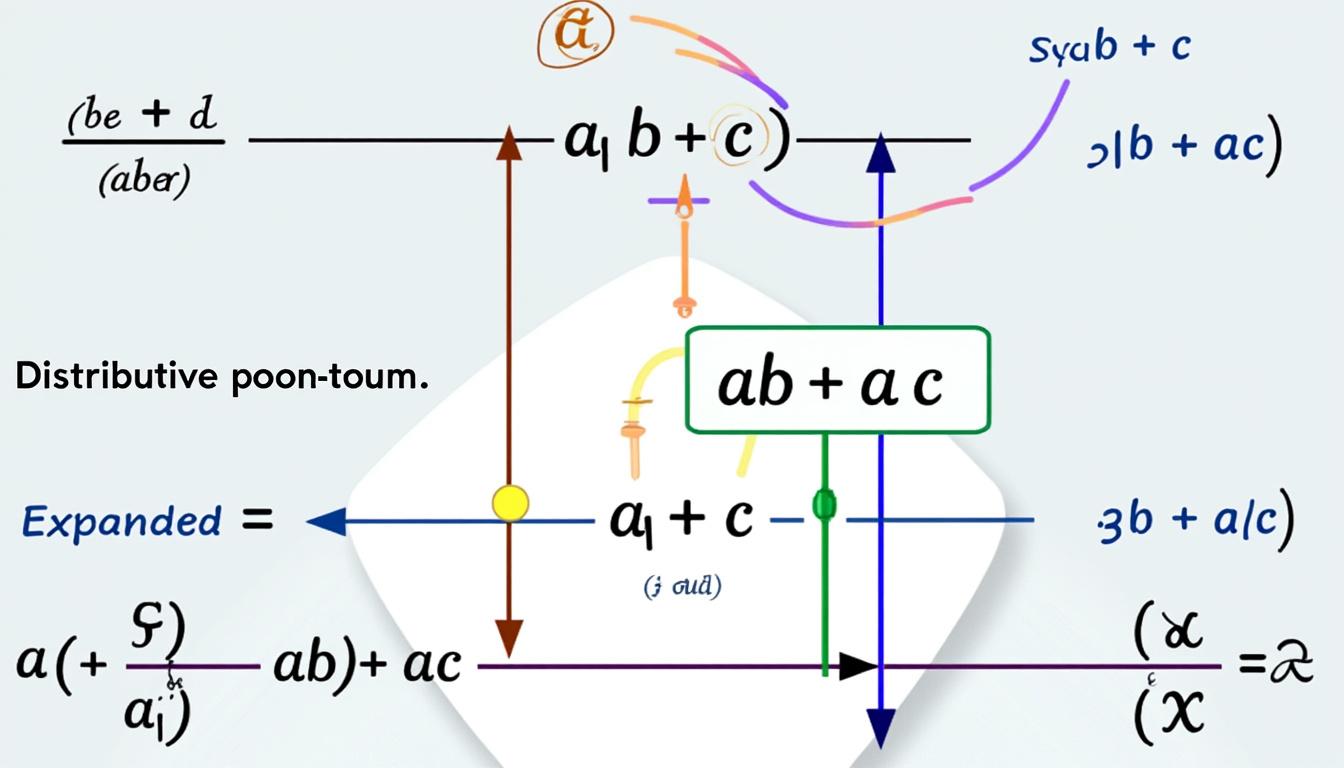
The distributive property is expressed mathematically as a(b + c) = ab + ac. This rule shows how multiplication distributes over the addition inside parentheses. By multiplying each term inside the parentheses by the external factor, one can rewrite an expression in an expanded form that is often easier to work with. For example, the expression 5(3 + x) becomes 15 + 5x when the distributive property is applied.
Understanding this property is not just about multiplication and addition; it also concerns subtraction, such as 4(7 – y) = 28 – 4y. This ability to transform expressions proves invaluable when trying to simplify equations, combine like terms, or check if two expressions are equivalent. In algebra classrooms across the United States, reinforcing this property supports learners aged 6th and 7th grade to build a solid foundation for future mathematical concepts.
Take for instance the scenario where a student is asked to expand the expression −7(−4 + x). By applying the distributive property, the student multiplies −7 by both −4 and x, resulting in 28 − 7x. This rewritten expression is equivalent to the original but easier to analyze and compare. This kind of practice strengthens mental math skills and deepens understanding of algebraic relationships.
Additionally, tasks involving the distributive property often serve as a first step toward learning factorization. Where expanding expressions involves distributing multiplication over addition, factorization involves recognizing common factors and rewriting expressions in a compact, factored form. Mastery of distribution is thus key to progression in algebra and beyond.
Combining Like Terms and Expression Matching Using the Distributive Property
Simplifying algebraic expressions often requires more than just distribution; combining like terms is a crucial next step to reduce expressions to their simplest form. Terms are considered like terms if they contain the same variable(s) raised to the same power. For example, 3x and 7x are like terms and can be combined into 10x, while 5x^2 cannot be combined with 3x because the variable powers differ.
When expressions are expanded using the distributive property, they often result in several terms that can be combined: for instance, expanding 2(x + 3) + 4x leads to 2x + 6 + 4x. Here, by combining the like terms 2x and 4x, the expression becomes 6x + 6, an equivalent expression that is simpler.
Expression matching exercises provide excellent practice by challenging learners to identify equivalent expressions through combinations of simplifying, distributing, and combining like terms. These activities enhance algebraic intuition, allowing students to recognize that 4(x + 2) + 3x matches with 7x + 8 after applying distribution and simplification steps. Matching equivalent expressions effectively fosters deeper conceptual understanding and fluency in algebra.
Practical application of these concepts can be observed when students use worksheets that align with current math standards, such as CCSS.6.EE.3 and CCSS.7.EE.A.1. These resources often present various expression matching challenges, reinforcing both distributive property and combining like terms in an engaging way. For example, students might be tasked with circling which expression among several options is not equivalent, pushing them to apply their knowledge critically.
Using well-structured learning aids such as those from Super Teacher Worksheets bolsters practice and offers a variety of problems from basic to advanced levels, focusing on these core algebraic skills. Balancing distribution and term combination is essential for students to confidently simplify and transform expressions.
Expanding Algebraic Expressions: Techniques and Illustrations
Expanding an algebraic expression means applying the distributive property to remove parentheses, thereby writing the expression as a sum or difference of terms. This is pivotal in solving equations and simplifying expressions to forms that can be analyzed or graphically represented.
Consider the expression 3(2a + 5b – 4). To expand it, multiply each term inside the parentheses by 3:
- 3 × 2a = 6a
- 3 × 5b = 15b
- 3 × -4 = -12
The expanded form hence becomes 6a + 15b – 12. This expanded form can then be simplified further if needed. Showing such examples, as in many math textbooks and online platforms like Online Math Learning, helps students visualize the process clearly.
Another important aspect is understanding that the distributive property applies to expressions involving variables, constants, and both addition and subtraction. Recognizing this flexibility allows students to more confidently tackle algebra problems. Additionally, teaching with visual tools such as area models brings conceptual clarity by associating multiplication with geometric interpretation.
Expanding expressions also sets the stage for factoring, where the reverse process is performed to rewrite the expression into a factored form. Mastery over expansion hence equips students with a dual perspective on algebraic manipulation and nurtures problem-solving versatility.
Applying the Distributive Property to Factorization and Real-World Problems
Factorization, often termed as factoring, is a vital algebraic process closely linked to the distributive property. It involves rewriting expressions as a product of their factors, often with the goal of solving equations, simplifying complex expressions, or analyzing algebraic structures. The distributive property lays the groundwork for factoring by helping recognize common factors within terms.
For example, consider the expression 12x + 18. Both terms share a common factor of 6, so factoring yields:
| Original Expression | Factored Form |
|---|---|
| 12x + 18 | 6(2x + 3) |
Here, the distributive property confirms that 6(2x + 3) is equivalent to 12x + 18. Recognizing this commonality often appears as the first challenge in many algebra classes. By factoring, solving quadratic equations or simplifying expressions becomes more approachable.
In practical contexts, the distributive property and factorization are fundamental when modeling real-world situations like calculating areas, budgeting, or optimizing resources. For instance, a construction contractor might use algebraic expressions to calculate paint needed for walls, where distributing multiplying factors over combined lengths simplifies estimations.
According to educational resources that focus on these fundamental skills, such as those outlined in Home Partner Strategies’ guides, the use of worksheets that emphasize distributive property understanding plays a pivotal role in improving problem-solving capacity for learners of all levels. This development continues well into higher-level mathematics and professional applications.
Engaging Practice with Worksheets and Games to Reinforce the Distributive Property
Consistent practice with well-designed worksheets is crucial for mastering the distributive property and recognizing equivalent expressions. These resources often include tasks such as simplifying expressions by combining like terms, distributing multiplication over addition or subtraction, and identifying which expressions among several options are equivalent.
Students typically progress through stages, beginning with basic expressions involving addition only and moving toward more complex algebraic challenges including subtraction, multiple variables, and exponents. For example, worksheets with exercises like simplifying 5(3a – 5) + 2a encourage practice in both distribution and combining like terms.
Many educators now incorporate interactive expression matching games that require identifying equivalent expressions. Such activities improve engagement and conceptual retention. Cards displaying expressions such as 4(x + 2) and 4x + 8 can be matched, exemplifying the distributive property in action. This gamified approach adds excitement to learning and deepens understanding.
For those looking for a comprehensive suite of these learning aids, platforms like Study.com offer detailed explanations, examples, and downloadable worksheets. Supporting these activities are videos that illustrate the property clearly, building confidence in learners step by step.
Using a variety of instructional techniques—visual, interactive, and written—parents and teachers can equip students with the knowledge to simplify algebraic expressions, expand and factor, and confidently write or recognize equivalent expressions. By consolidating these essential math properties, learners set a strong foundation that paves the way for success in algebra and beyond.