
Density is a foundational concept in the realm of matter and material science, often bridging the gap between the realms of physics and chemistry. It describes how much mass is contained within a specific volume of a substance, making it a crucial characteristic in understanding and measuring materials. But beyond this simple definition lies a more profound inquiry: is density a physical or chemical property? The distinction between these two types of properties is essential in scientific study as it determines whether observing or measuring a characteristic changes the fundamental nature of the material. This article delves deep into this question, illuminating the nature of density by exploring its characteristics, the science underlying it, and its impacts across various fields and everyday applications. As experts and enthusiasts alike strive to grasp the complexities of matter in 2026 and beyond, shining a spotlight on density offers clarity on how we categorize and manipulate the material world.
In brief:
- Density is a physical property because it describes the mass-to-volume ratio without altering the substance’s chemical structure.
- Unlike chemical properties, density does not involve chemical reactions or transformations in the material’s identity.
- Physical properties like density can be observed or measured without changing the substance, while chemical properties involve a potential change in substance composition.
- Understanding density’s physical nature is essential for applications ranging from material identification to industrial quality control and everyday phenomena like buoyancy.
- Misconceptions often arise by confusing density with mass or volume, and by assuming changes in density automatically indicate chemical reactions, which is not always true.
Density as a Fundamental Physical Property of Matter
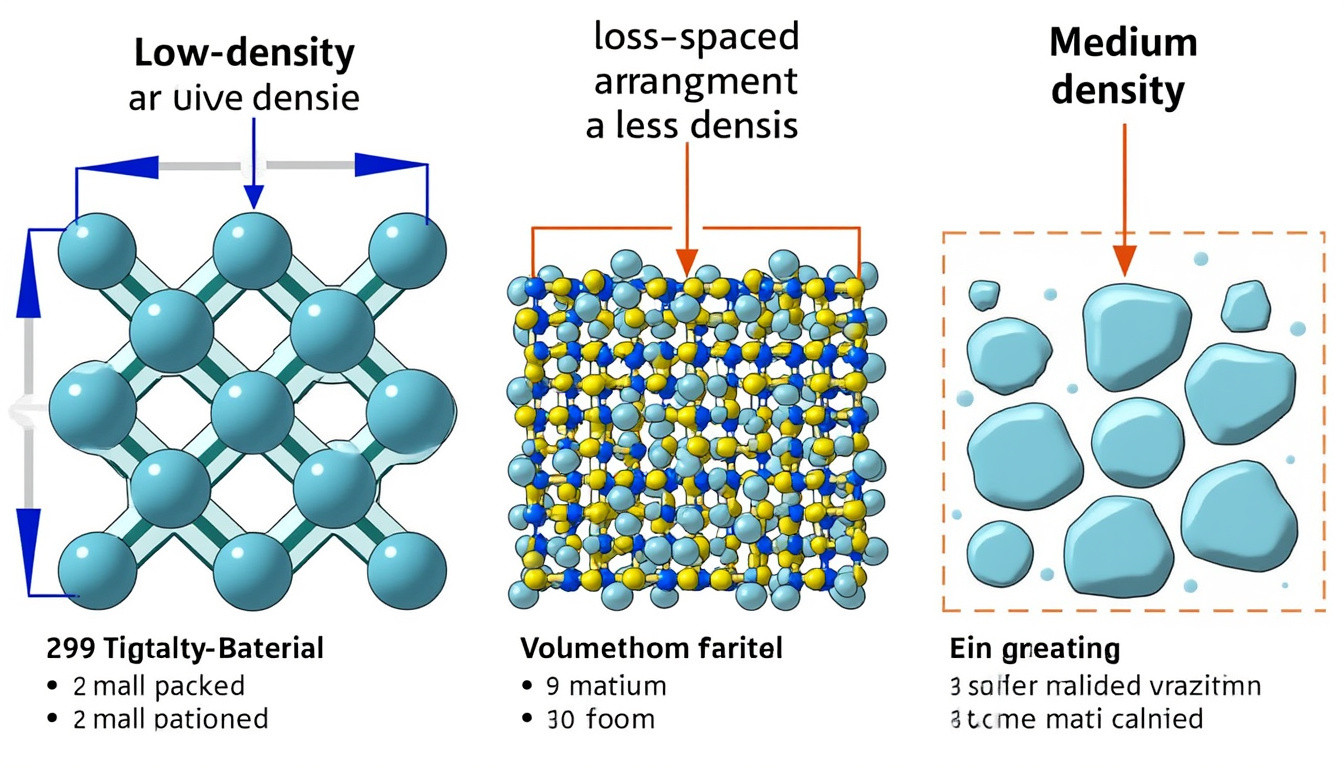
Among the many attributes used to describe matter, density stands out as a fundamental physical property that reveals how tightly matter’s particles are packed together. By definition, density is calculated as the mass of a substance divided by its volume (density = mass/volume), which yields a characteristic value unique to each material. This characteristic means that density serves as a fingerprint helping scientists and engineers identify substances without altering them chemically.
The essential hallmark of physical properties, density included, is their observability or measurability without changing the chemical identity of a substance. This is clear when observing water, a substance whose density changes depending on its physical state—liquid water is denser than ice—but remains chemically identical (H₂O) throughout these state changes. These are classic examples of physical changes where only appearance or phase varies, not the chemical composition. This distinction anchors density firmly in the realm of physical properties, setting it apart from chemical properties that involve transformations at the molecular or atomic levels.
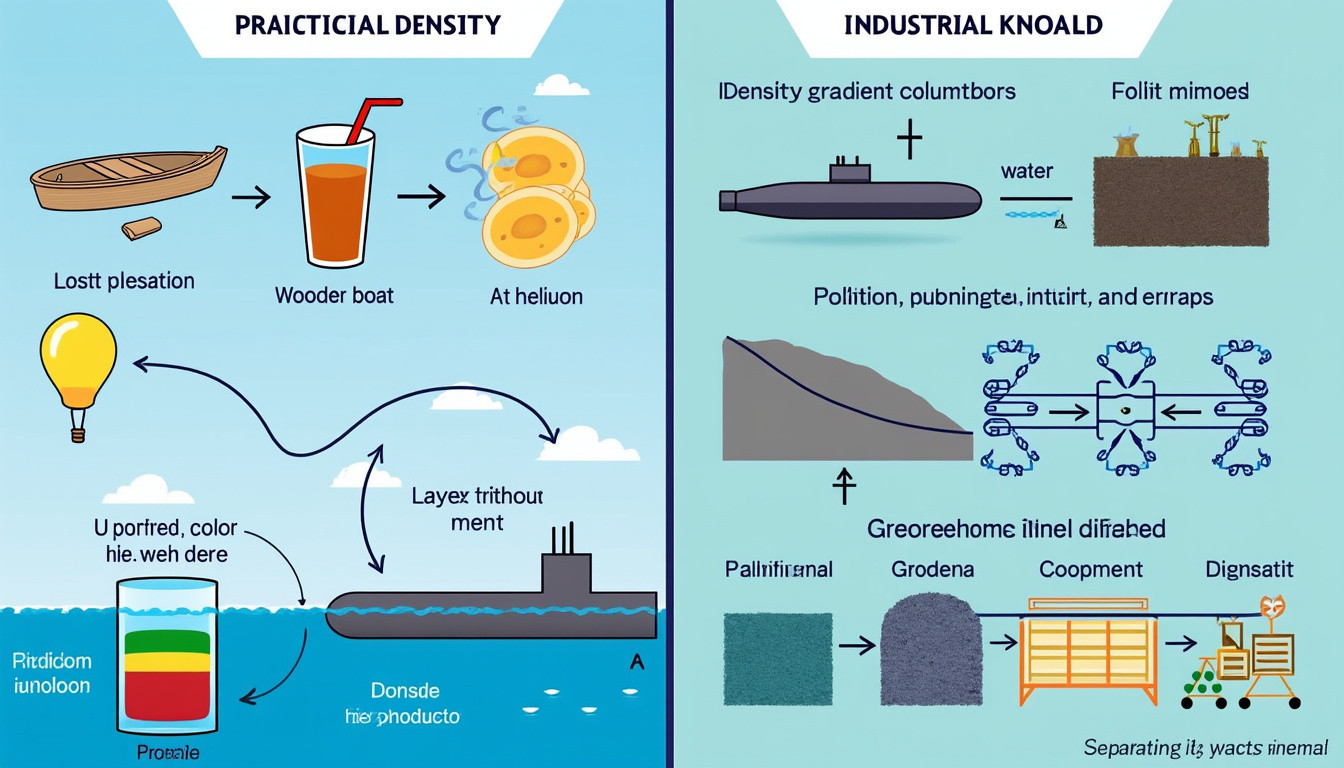
Practical applications of density underscore its importance as a physical property. For instance, the concept of buoyancy—why objects float or sink—is directly tied to comparing densities. A solid object placed in a fluid will sink if it is denser than the fluid and float if it is less dense, a phenomenon easily observed without any chemical alteration. Such principles are essential in engineering, maritime design, and environmental science, illustrating how density measurements guide decisions without modifying the substance itself.
These observations align with authoritative descriptions found on Britannica and LibreTexts Chemistry, where density is systematically defined as a physical property due to its consistent, measurable nature and its independence from chemical changes. Thus, recognizing density as a physical property is not merely semantic but pivotal to understanding how matter behaves under different conditions.
Distinguishing Physical Properties from Chemical Properties
It is critical to clearly differentiate between physical and chemical properties to properly classify characteristics like density. Physical properties are those that can be observed or measured without inducing a change in the substance’s chemical identity. These include not only density, but also color, hardness, melting point, boiling point, and electrical conductivity. When any of these are measured or observed, the substance remains fundamentally unchanged in its molecular composition, adhering strictly to the conservation of matter principle.
Chemical properties, however, describe a substance’s potential and behavior during a chemical change — that is, a transformation that involves the making or breaking of chemical bonds forming new substances with new chemical identities. Examples of chemical properties are flammability, reactivity with acids, or resistance to corrosion. Chemical changes are intrinsically irreversible at the molecular level (except in special cases) and fundamentally alter the composition of the original substances.
For example, when wood burns, it undergoes a chemical reaction producing ash, carbon dioxide, and water vapor—none of which retain the chemical identity of wood. This contrasts starkly with changing a substance’s physical state or measuring density, which leave the underlying molecules intact.
To evaluate if a property is chemical or physical, one can ask: Does the observation or test form a new substance with different chemical bonds? If yes, it is a chemical property or change. If no, and only physical characteristics like phase, color, or density shift, it is a physical property. This simple yet profound distinction helps chemists, engineers, and researchers anticipate material behaviors, make safer choices, and design innovative materials.
Real-World Importance of Density as a Physical Property in 2026
The categorization of density as a physical property goes well beyond textbook definitions and enters the realm of practical and economic consequence, especially in today’s technologically advanced and environmentally conscious society. In 2026, industries ranging from manufacturing to environmental science depend heavily on precise density measurements for everything from quality control to safety certification and novel material development.
Consider aerospace engineering: aircraft components require materials with specific densities to balance strength and weight for fuel efficiency and safety. Any deviation from expected density values during fabrication can signal problems like impurities or structural weaknesses. Similarly, geologists identify minerals based on density differences, aiding natural resource exploration and environmental assessment.
In daily life, density influences phenomena such as cooking, where oil’s lower density compared to vinegar allows separation in salad dressings, or in testing egg freshness, where eggs that float are less dense due to gas buildup inside, indicating spoilage. Even urban planners utilize density concepts in building materials to optimize structural integrity while minimizing costs. These countless examples showcase density’s profound impact as a physical property, measurable without modifying a substance’s essence.
Below is a table summarizing various practical applications where density’s role is pivotal:
| Application | Significance of Density Measurement |
|---|---|
| Cooking | Separating liquids with different densities, freshness testing of food products |
| Shipping and Maritime Engineering | Buoyancy calculations ensuring vessel stability and cargo safety |
| Geology | Mineral identification and resource evaluation |
| Manufacturing | Quality control and selection of materials with specific density-driven properties |
| Medicine | Analyzing body fluids; e.g., specific gravity measurements of urine and blood |
By consistently measuring density without affecting the chemical structure, industries today rely on this physical property to assure quality, safety, and innovation. The ability to analyze matter through such non-destructive methods underscores density’s indispensability across scientific and practical domains alike.
Common Misconceptions and Clarifications About Density and Material Properties
Despite its apparent simplicity, several misconceptions surrounding density persist, often confusing it with mass or volume and misapplying its changes as signs of chemical reactions. Clarifying these misunderstandings is essential, particularly for students and professionals dealing with matter characterization.
The first key misconception is conflating density with mass or volume. While mass represents how much matter is present and volume measures space occupied, density is the ratio of these two and does not change with sample size. This makes density an intensive property, in contrast with mass and volume, which are extensive properties dependent on quantity. For example, a small chunk of gold shares the same density as a large bar, although their masses and volumes differ widely.
Another common misunderstanding is equating changes in density with chemical reactions. However, changes in density often reflect physical changes such as temperature or phase modifications without altering the substance’s identity. Water’s density, for example, varies with temperature and changes when freezing into ice, yet throughout these changes, it remains chemically H₂O. Only when the change radically and irreversibly alters the substance’s composition—such as the formation of new compounds or products—does it indicate a chemical change linked to chemical properties.
For enhanced clarity, comprehensive explanations of the difference between physical and chemical properties, including density’s role, can be further explored via Science Oxygen’s breakdown of density, which offers accessible insights for a broad audience.
Distinguishing Density from Other Measurement Concepts
To avoid confusion in scientific and industrial work, it’s important to remember what density is and what it is not:
- Density is mass per unit volume, an intensive property characteristic of the material.
- Mass is the total amount of matter, an extensive property dependent on object size.
- Volume relates to the space occupied and varies independently of mass or composition.
- Physical changes affecting density usually involve reversible transformations without changing chemical identity.
- Chemical changes involve new substances forming and typically lead to permanent changes in density.
Measurement of Density: Techniques and Scientific Relevance
The precise measurement of density remains an important technique in laboratories, industry, and research institutions worldwide. Modern equipment and scientific methodologies allow density to be quickly and accurately determined, facilitating material analysis without destruction or alteration.
Mass is typically measured with high-precision balances, while volume might be assessed by direct measurement using graduated cylinders, displacement methods, or advanced imaging techniques for irregular objects. The calculated density, given by mass divided by volume, provides a key characteristic used for identification and quality assurance.
Importantly, density becomes especially valuable as an intensive property in research fields like physics and chemistry, where it helps reveal changes in state, purity, and molecular arrangement. For example, in the pharmaceutical industry, density measurements are critical to ensure consistency in material composition, while in environmental studies, density assists in studying water quality and pollution dispersal.
With density remaining constant for a pure substance at a given temperature and pressure, this physical property acts as a reliable reference point. Understanding and utilizing this principle aids professionals working with matter at macro and micro scales alike.
Interested readers can explore detailed explanations and mathematical underpinnings at Physics Classroom’s density tutorial, which provides in-depth scientific context and educational resources.