
The concepts of squares and square roots are foundational in mathematics, weaving through many fields like algebra, geometry, and even practical applications in science and engineering. Squares result from multiplying a number by itself, a process formally known as exponentiation. Conversely, the square root is an operation that reverses this process, identifying the original number that, when squared, produces a given value. Together, these operations are vital for understanding relationships within numbers, simplifying expressions, and solving equations. Their properties are not only significant for academic learning but also essential in developing analytical thinking and problem-solving skills.
As you delve into the properties of squares and square roots, it’s essential to comprehend the subtle distinctions between perfect squares—numbers whose square roots are whole numbers—and irrational numbers, which cannot be precisely expressed as fractions. Exploring these ideas uncovers the layers beneath everyday mathematics, showing how these concepts form the backbone of complex calculations and theoretical proofs. This understanding empowers learners and professionals alike to tackle mathematical challenges with confidence and precision.
Brief Highlights:
- The square of a number results from multiplying the number by itself, often represented with a superscript 2 in exponentiation.
- A perfect square has an integer as its square root, whereas the square root of other numbers may be an irrational number.
- The square root reverses the squaring operation, denoted by a radical symbol, and possesses unique algebraic properties that simplify complex expressions.
- Methods such as prime factorization, repeated subtraction, and division techniques enable effective root extraction.
- Understanding these properties is crucial for broader applications in algebra, geometry, and fields requiring numerical analysis.
Exploring the Fundamentals of Squares and Exponentiation in Mathematics
At the heart of understanding squares lies the definition: squaring a number means multiplying it by itself. This operation is a specific form of exponentiation, where the base number is raised to the power of two. For example, squaring 5 is denoted as 52 and results in 25.
This concept extends beyond positive numbers. When squaring negative numbers, the product is always positive because the multiplication of two negative factors yields a positive result. For instance, (-4)2 equals 16. This property is critical in algebra and explains why squares of negative and positive numbers sometimes share the same numerical result, though their origins differ.
Below is a concise table illustrating the squares of the first twelve natural numbers and their corresponding squares:
| Number (n) | Square (n2) |
|---|---|
| 1 | 1 |
| 2 | 4 |
| 3 | 9 |
| 4 | 16 |
| 5 | 25 |
| 6 | 36 |
| 7 | 49 |
| 8 | 64 |
| 9 | 81 |
| 10 | 100 |
| 11 | 121 |
| 12 | 144 |
Recognizing perfect squares is instrumental in many mathematical processes, particularly in root extraction and simplifying algebraic expressions. This foundational knowledge is reliably presented in educational resources like Property explanations of square roots which offers comprehensive insight into these topics.

More interestingly, the concept of exponentiation embraces broader powers beyond squaring, but the square holds a unique place due to its direct geometric interpretation, such as calculating the area of a square-shaped object. This connection enriches the intuitive understanding of the arithmetic involved.
Deep Dive into Square Roots and Radicals: Principles and Properties
The square root is mathematically defined as the number which, when multiplied by itself, returns the original number. If we denote ‘a’ as a number, its square root is ‘b’ such that b2 = a. The principal square root, the non-negative root, is conventionally represented by the radical sign ‘√’. For example, √49 equals 7.
Importantly, each positive perfect square yields two roots: a positive and a negative one. Taking 25 as an example, both 5 and -5 satisfy the equation 52 = 25 and (-5)2 = 25. However, the square root symbol primarily denotes the positive root because it represents the principal value.
Some notable properties define the behavior of square roots in algebraic expressions:
- Product Property: The square root of a product equals the product of the square roots, i.e., √(ab) = √a × √b for non-negative a and b.
- Quotient Property: The square root of a quotient equals the quotient of the square roots, or √(a/b) = √a / √b, where b is positive.
- Square Root of a Square: Applying a square root to a squared number returns the absolute value of the original number, √(a2) = |a|.
- Squaring a Square Root: Squaring a square root undoes itself, resulting in the original number: (√a)2 = a.
These properties can be leveraged to simplify complex radicals and expressions in algebraic calculations and problem-solving. More detailed explanations about these properties are available on platforms such as Vedantu’s comprehensive guide on squares and square roots, tailored to support learners at various levels.
Furthermore, square roots of negative numbers introduce the concept of imaginary numbers, usually expressed with the unit ‘i’, where i2 = -1. This extension allows deeper exploration into advanced mathematics, including complex number theory.
Techniques for Root Extraction: Practical Methods to Determine Square Roots
Root extraction—the process of finding the square root of a number—can be approached through several practical methods beyond basic calculators and software tools. These classical techniques enhance conceptual understanding and provide manual methods suited for mental math or when resources are limited.
Some widely used methods include:
- Repeated Subtraction: Involves subtracting odd numbers successively until the original number reduces to zero or a negative number. The count of subtractions indicates the square root. For example, to find √16, subtract 1, then 3, then 5, and finally 7, totaling 4 subtractions, so √16 = 4.
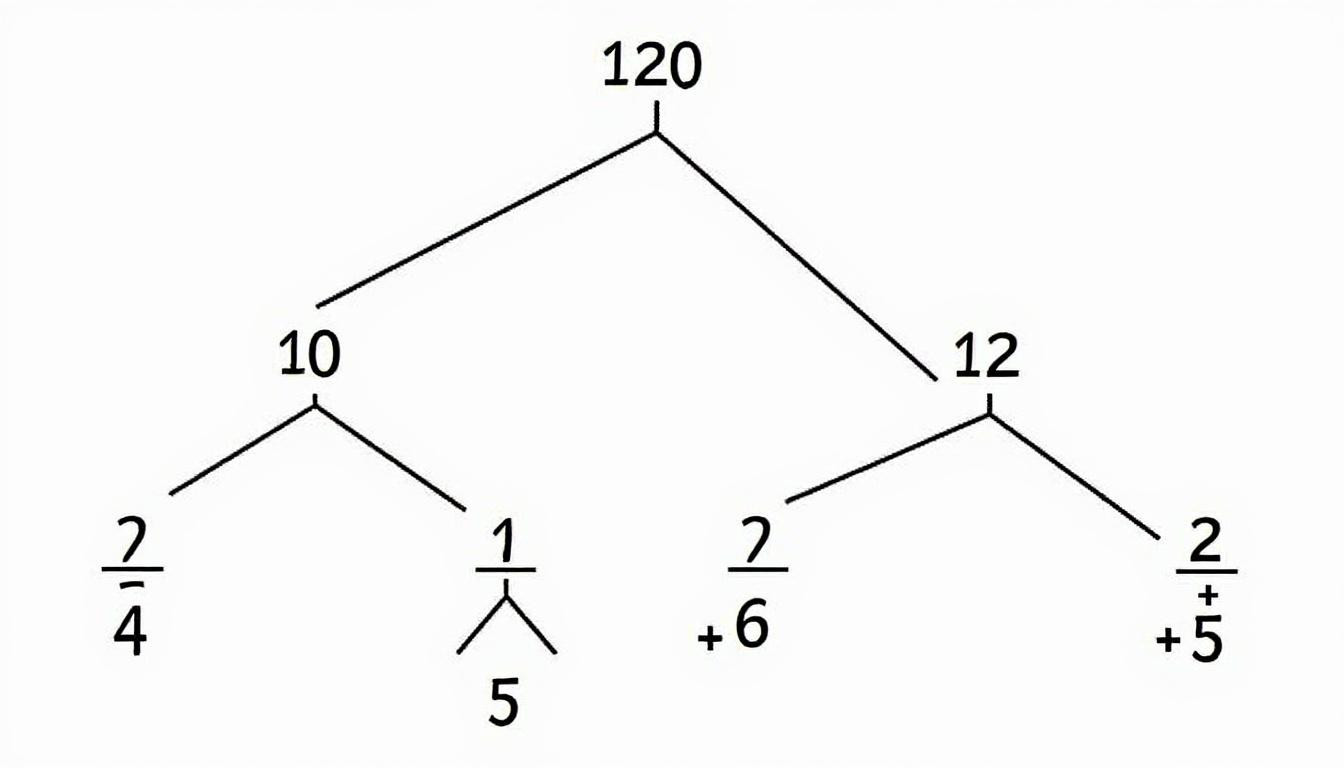
- Prime Factorization: Decomposes the number into its prime factors. The square root is found by pairing factors and multiplying one from each pair. An example is √144 = √(2×2×2×2×3×3) = 2×2×3 = 12.
- Division Method: Suitable for large numbers, this algorithm divides the number into digit pairs, iteratively calculates the quotient and remainder using a process similar to long division, and determines the square root.
These methods emphasize not only computational skills but also deepen the mathematical intuition behind root extraction. Understanding them equips students and enthusiasts with valuable tools to solve problems mentally or in exams without direct calculator support.
Below is a comparative table summarizing these root extraction techniques:
| Method | Description | Application Example |
|---|---|---|
| Repeated Subtraction | Subtract successive odd numbers until zero is reached; number of subtractions equals square root. | Finding √16 by subtracting 1,3,5,7 yields 4 subtractions, so √16=4. |
| Prime Factorization | Factor number into primes, group pairs, multiply one from each pair for square root. | 144 = 2×2×2×2×3×3, so √144 = 2×2×3 = 12. |
| Division Method | Divide digit pairs, calculate quotient and remainder stepwise to find root of large numbers. | Systematic long division approach for numbers like 7056. |
Understanding the Role of Perfect Squares and Rationality in Root Calculations
Perfect squares, by definition, are numbers that can be expressed as the square of an integer. Their square roots are rational numbers, typically whole numbers, which makes calculations and algebraic operations more straightforward. For example, 64 is a perfect square since 82 = 64, and thus, √64 = 8.
In contrast, the square roots of numbers that are not perfect squares are irrational numbers — decimals that neither terminate nor repeat. Numbers like √2 and √3 exemplify this, with decimal expansions that continue infinitely without pattern, posing unique challenges in both theoretical and applied mathematics.
The distinction between rational and irrational roots is crucial not only in pure mathematics but also in applied fields such as physics and engineering, where approximations must be carefully managed. For instance, when designing precision components or calculating distances, understanding the nature of these roots informs the accuracy and methods used.
Key properties relating perfect squares and their roots include:
- A perfect square’s square root is always a rational and often an integer number.
- Square roots of non-perfect squares generally result in irrational numbers, requiring approximate representation.
- Negative numbers do not have real square roots; such roots are imaginary or complex.
To simplify expressions involving square roots, one often factors the radicand (the number inside the radical) into perfect square components, exploiting properties like √(k² × m) = k√m, where k is a perfect square factor. This approach makes algebraic manipulation much easier and more elegant.
Further exploration of these properties can be found on pages dedicated to definitions and examples of squares and square roots, which offer comprehensive perspectives for learners and educators.
Practical Applications and Algebraic Importance of Squares and Square Roots
Squares and square roots underpin many practical applications across different mathematical areas, especially algebra. In geometry, for example, the calculation of areas depends on squares, such as determining the surface area of square and rectangular shapes. Root extraction plays a critical role in finding lengths or distances, often via the Pythagorean theorem where the relationship between the sides of a right triangle involves square and square roots.
Algebraic expressions frequently include square and square root operations to solve equations, simplify expressions, or transform functions. Mastering these operations is fundamental for progressing into more advanced topics such as quadratic equations, where the square root often surfaces when applying the quadratic formula.
In finance, statistics, and various scientific computations, understanding these mathematical concepts also becomes crucial. For example, the standard deviation—a key measure in statistics—is calculated using square roots, highlighting their presence beyond pure theoretical study.
To illustrate, consider the problem of calculating the diagonal length of a rectangular smartphone screen. If the width is 6 inches and height is 8 inches, the diagonal length d can be found using the formula:
d = √(62 + 82) = √(36 + 64) = √100 = 10 inches.
This practical example neatly demonstrates the integration of squares and square roots in everyday contexts.
Questions about these operations and their practical applications are further explored in detail at Helping With Math’s dedicated resource, providing exercises and explanations for learners to advance their skills.