
Understanding property tax rates in Sacramento County is crucial for homeowners and investors navigating the local real estate market. The county’s tax system directly influences financial planning for residents, affecting mortgage affordability and investment returns. In Sacramento, the combination of Proposition 13 regulations, local voter-approved assessments, and dynamic property values creates a unique tax environment that demands attention. Those unfamiliar with how tax rates and assessments interplay may face unexpected fiscal challenges or miss opportunities for savings through exemptions and appeals. From the historical roots of California’s tax caps to the practical impact on 2026 budgets, recognizing the components of property tax bills empowers residents to manage their liabilities effectively.
Situated at the crossroads of California’s agricultural heartland and growing urban hubs, Sacramento County reflects vibrant real estate dynamics. With properties ranging from suburban family homes to high-density urban developments, the county’s tax policies must support essential public services like education, infrastructure, and public safety. These services hinge on tax revenues collected through a formula that limits increases to manageable levels while financing new projects via local levies. An in-depth grasp of tax rate calculations informs both first-time homeowners budgeting for payments and seasoned investors monitoring property valuation trends. In understanding these mechanisms, Sacramento County taxpayers can adopt strategic approaches to optimize their expenditures and plan confidently for the future.
Brief:
- Sacramento County property taxes are governed primarily by Proposition 13, capping base rates at around 1% of assessed value plus local voter-approved bonds.
- Property assessments are based on fair market value as of January 1st or ownership changes, with annual increases capped at 2% for existing owners.
- Supplemental taxes may apply for recent homebuyers reflecting value shifts.
- Key payment deadlines in 2026 are critical to avoid penalties, including January 1 lien date and November 1 first installment due.
- Taxpayers can pursue exemptions such as the California Homeowners’ Exemption and file appeals under Prop 8 for declining market values.
- Digital tools and AI services are increasingly available for estimating taxes and managing appeals efficiently.
- Awareness of tax rate components supports better financial planning and community investment appreciation.
Structural Framework of Property Taxation in Sacramento County
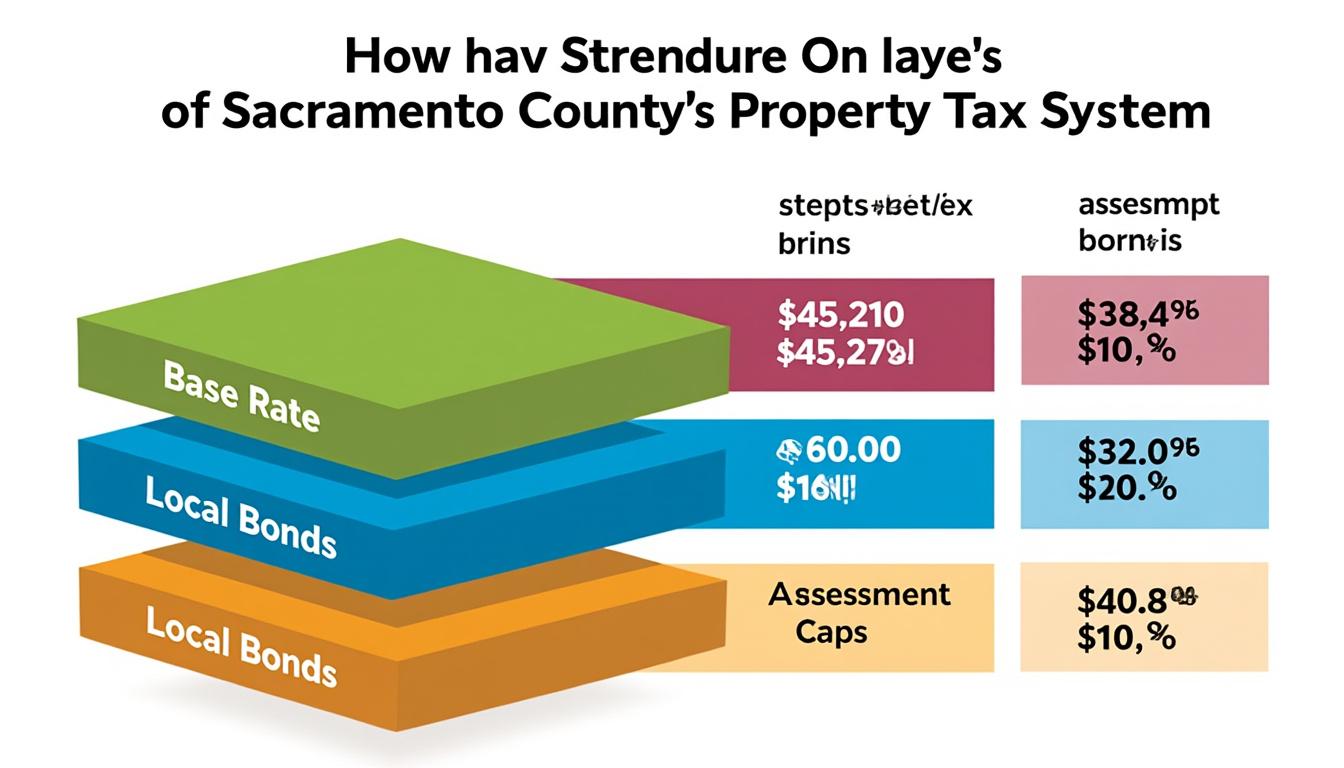
Property tax in Sacramento County operates within a complex but structured system that reflects California’s unique approach to real estate taxation. Central to this system is the enduring impact of Proposition 13, passed in 1978, which revolutionized taxation by limiting property tax rates and annual assessment increases. Under this proposition, Sacramento County sets the base property tax rate at roughly 1% of your property’s assessed value. This assessed value is defined not by current market fluctuations annually but rather by the property’s fair market value at the time of purchase or January 1st of the assessment year.
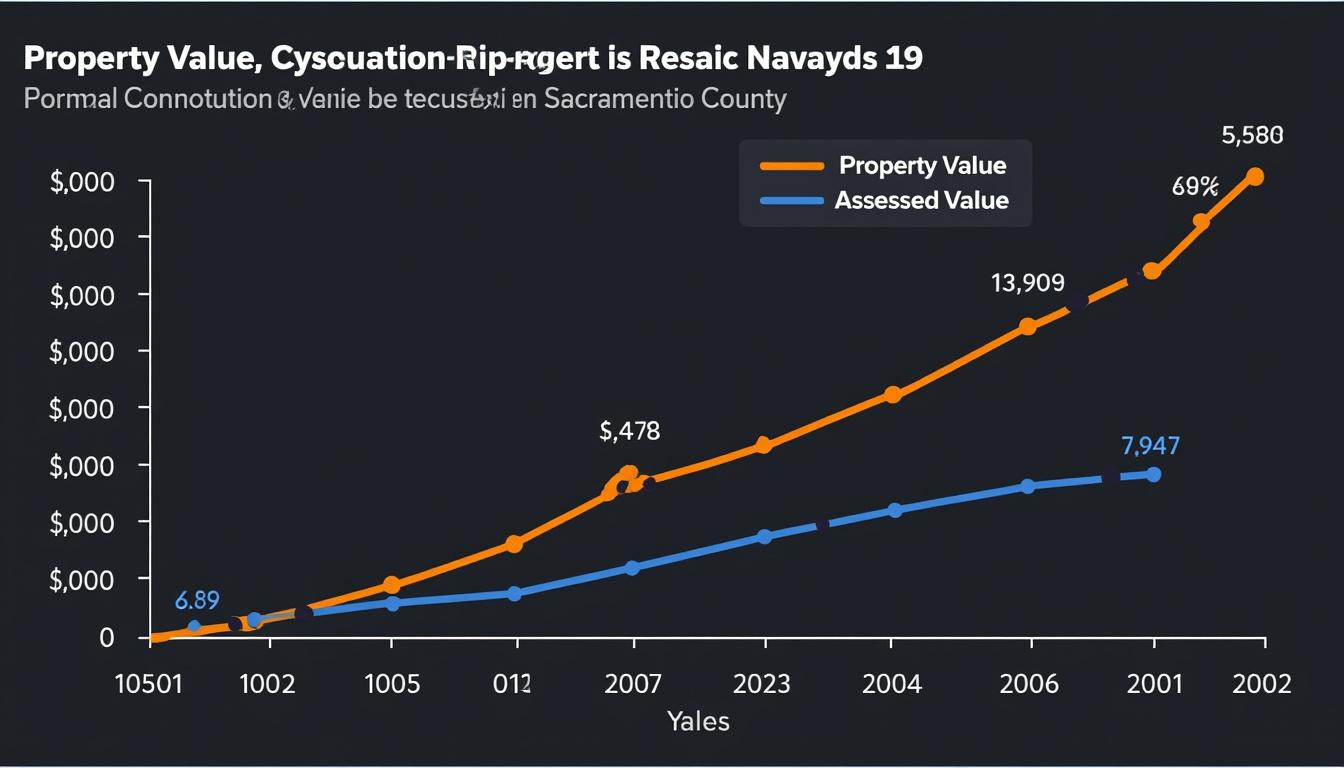
The County Assessor’s role is pivotal—it estimates your property’s market value and applies an annual cap limiting increases to a maximum of 2% as long as you remain the owner. This mechanism provides a degree of predictability and protection for long-term homeowners, shielding them from sudden spikes in tax bills which could otherwise accompany rapid market shifts. However, when a property changes hands, the assessed value resets to the new market value, potentially causing a significant increase in taxes for new owners, which often results in a supplemental tax bill to « catch up » for the difference since the purchase date.
In addition to this base rate, Sacramento County residents may also be subject to local voter-approved special assessments and bonds. These levies finance community benefits such as school improvements, public safety facilities, and transportation infrastructure. For example, if a bond measure passed to fund a local elementary school renovation, Sacramento homeowners would see an additional component added to their property tax bill, usually expressed as a dollar amount per $100,000 of assessed value.
This layered tax structure means the overall effective tax rate in Sacramento isn’t strictly 1% but typically ranges between 0.68% and 0.78%, depending on the combination of levies applicable to each property. While Sacramento’s effective rate may be higher than the statewide average of approximately 0.71%, it reflects robust investments in local community infrastructure.
For those seeking detailed breakdowns and personalized tax calculations, the California Property Tax Calculator for Sacramento County provides a valuable resource, allowing homeowners to input property values and view anticipated tax bills factoring in all relevant levies.
Key Tax Payment Dates and Their Impact on Sacramento Homeowners’ Financial Planning
The 2026 calendar brings important deadlines Sacramento property owners must observe to avoid penalties or loss of appeal rights. Property tax payment in Sacramento County is split into two installments: the first installment is due by November 1 of the tax year, while the second installment is due by February 1 of the following year.
Taxes become a lien on real estate as of January 1 of each year—a date impacting financial ownership and legal responsibilities. Homeowners should mark April 10 and December 10 closely on their calendars. These days represent the last chance to pay the second and first installments, respectively, without incurring a 10% late penalty. Missing these deadlines leads to added fees that can escalate quickly.
For property owners who dispute their assessed value, a window opens on July 2, allowing formal assessment appeals to be filed with the County Assessor’s office. This process enables taxpayers to challenge what they believe to be an over-assessment based on market conditions or property characteristics. Filing an appeal requires careful documentation and timing; the final day to appeal is December 1 each year.
The calendar also highlights an August 31 deadline concerning unsecured personal property such as boats, aircraft, and business fixtures. Paying attention to these smaller but significant tax obligations can prevent penalties and legal complications.
| Date | Deadline Description | Consequences/Importance |
|---|---|---|
| January 1 | Tax lien date for property tax year | Establishes tax liability; affects ownership responsibility |
| February 1 | Second installment due date | Healthy timeliness avoids penalties |
| April 10 | Second installment delinquent date | 10% penalty applied after this date |
| July 2 | Appeal filing window opens | Opportunity for tax relief due to assessment disputes |
| August 31 | Unsecured personal property tax due | Prevents penalties on non-real estate property |
| November 1 | First installment due date | Ensures timely payment for new tax year |
| December 1 | Last day for formal appeal | Final chance to contest assessments |
| December 10 | First installment delinquent date | 10% penalty if unpaid by this date |
| December 31 | Informal review deadline | Request free informal property value review |
By understanding and anticipating these deadlines, Sacramento homeowners can maintain good standing and avoid unnecessary financial penalties that might otherwise create burdensome debt or legal issues. Resources, such as the official Sacramento County Tax FAQ, offer guidance on how to approach payments and appeals effectively.
Tax Assessment and Calculation Techniques Impacting Sacramento Real Estate Owners
Accurate assessment of property value is the backbone of property tax calculation in Sacramento County. The assessor estimates property values using a combination of direct market analysis and valuation models, reflecting characteristics such as location, size, improvements, and comparable sales. Unlike some states, California’s system under Proposition 13 limits assessment increases to a maximum of 2% annually for existing owners—unless a transfer or new construction triggers reassessment at current fair market rates.
This model yields stability but creates discrepancies between market values and assessed values over time. For instance, a property bought in 2015 may have a significantly lower assessed value than its current market value, resulting in lower property taxes than newer purchases of similar homes. However, when local market trends soften, homeowners can invoke Prop 8 protections to request temporary reductions in assessed value, basing appeals on decreased market value evidence.
Supplemental taxes arrive when a sale or new construction changes the assessed value mid-year. Because base taxes are collected annually but value changes can happen anytime, these supplemental bills « catch up » the difference between old and new assessed value, billed proportionally from the date of change. This nuance is why recent homebuyers often see an unexpected bill shortly after closing.
To navigate these complexities, numerous homeowners rely on digital tools. Platforms like Tax Rates Sacramento County Property Tax allow users to input property details and see calculated tax expectations based on current rates and exemptions. These calculators provide transparency and help eliminate guesswork during budgeting.
Overall, the combination of capped assessment increases, supplemental tax calculations, and voter-approved levies produces a multifaceted tax environment. Recognizing each element’s role facilitates strategic planning—whether budgeting monthly expenses or evaluating investment property yields.
Maximizing Savings: Tax Exemptions and Appeal Strategies in Sacramento County
Many homeowners overlook avenues to reduce their property tax burden legally. Sacramento County offers several exemptions and appeal options to assist taxpayers in managing their financial obligations effectively. One common benefit is the California Homeowners’ Exemption, which grants eligible primary residents a reduction of approximately $70 annually on their tax bill. While this amount may seem modest, it provides tangible relief over time and can be combined with additional exemptions for seniors, disabled veterans, or low-income homeowners.
In cases where a property’s market downturn outpaces the assessed value, taxpayers can file a Prop 8 appeal to seek a temporary reduction. This process requires submitting evidence that the property’s market value has dropped below the current assessment. Successfully reducing your assessed value through a Prop 8 appeal lowers your taxable base, decreasing yearly property tax expenses until market values recover.
With evolving technology, professional services are incorporating AI to streamline tax management. For example, platforms like LowPropTax harness machine learning algorithms to analyze property data, detect over-assessments, and guide users through the appeal process automatically. These tools democratize access to complex tax strategies and help homeowners avoid overpayment.
When planning appeals, careful timing is critical. Appeals must be filed within designated windows—typically by December 1 in Sacramento County—to be considered for the current tax year. Homeowners also have the option to request informal assessments or reviews ahead of formal appeals, sometimes permitting adjustments without lengthy proceedings.
Integrating these approaches into your property tax strategy enhances financial flexibility and contributes to long-term wealth preservation. Surveying available resources regularly ensures you remain informed of changing laws, exemptions, or tools that can further reduce your property tax liability.
- Claim the California Homeowners’ Exemption to reduce your taxable value.
- File timely Prop 8 appeals when market downturns affect your property’s value.
- Explore exemptions for seniors and disabled citizens unique to Sacramento County.
- Utilize AI-assisted services for data-driven appeal management.
- Consult the County Assessor’s informal review option to preliminarily contest assessments.
- Stay ahead of filing deadlines to avoid forfeiting appeal rights.
For more detailed approaches on reduction techniques, consider resources like LowPropTax’s comprehensive Sacramento Tax Guide that delves into practical application and case studies.
The Role of Property Taxes in Supporting Local Government and Community Services in Sacramento
Beyond the personal financial responsibilities, property taxes in Sacramento County fulfill a vital civic function—they are the cornerstone of funding for essential public services. Schools, roads, libraries, public safety, and parks depend heavily on property tax revenues to operate and improve. Given this, understanding the flow of tax dollars helps residents appreciate their contribution to community well-being.
For instance, recent local bond measures passed by Sacramento voters have expanded funding for school facility upgrades and emergency response infrastructure. Without property tax revenues, these projects would face significant delays, negatively impacting quality of life. The tax amount collected is then allocated proportionally by local government agencies, each with a defined budget earmarked for particular services.
The interdependence between property tax income and community development also influences Sacramento’s real estate appeal. Investments in public goods enhance neighborhood desirability, often increasing home values, which in turn affect future assessments and tax liabilities. This cyclical relationship underscores the role of property taxes as both a financial responsibility and a communal investment.
Understanding this dynamic equips homeowners to engage more actively in local elections, particularly when new bond measures or tax levies are proposed. Being informed about how tax rates are used cultivates responsible citizenship and empowers residents to advocate effectively for resource allocation aligned with community priorities.
For those interested in the broader fiscal context, exploring analyses like HonestCasa’s Sacramento Property Tax Guide provides clarity on how local government budgets integrate tax revenues from property owners to deliver public services.