
In the intricate world of chemistry, the behavior of solutions extends far beyond simple dissolution. The subtle interplay of solute and solvent results in properties that are either dependent purely on particle number or their specific identities and interactions. While colligative properties such as boiling point elevation, freezing point depression, and vapor pressure lowering have long been studied for their dependence on solute concentration, it is the exploration of non-colligative properties that reveals the unique effects stemming from the molecular nature and interactions within chemical solutions. These properties profoundly influence solution behavior in both natural and industrial contexts, highlighting the complexity of solute-solvent relationships and molecular properties that govern physical chemistry.
Key insights:
- Non-colligative properties depend on the chemical identity and interaction of solutes in solutions, contrasting with concentration-dependent colligative attributes.
- Vapor pressure lowering, boiling point elevation, and freezing point depression are classical examples of colligative properties, but the full picture requires understanding non-colligative influences.
- Unique effects arise from molecular properties such as polarity, hydrogen bonding, and ion pairing, impacting physical chemistry outcomes beyond mere particle count.
- Solute-solvent interactions can lead to solution behaviors that vary significantly from ideal expectations, especially in complex chemical systems and biological environments.
- Understanding these phenomena is vital for applications in industrial processes, medicine, and environmental chemistry.
Distinguishing Non-Colligative Properties in Chemical Solutions: Fundamentals and Examples
The distinction between colligative and non-colligative properties centers on what governs the solution behavior: particle quantity or particle identity. Colligative properties depend solely on the total number of dissolved particles, regardless of their nature. This principle allows predictions about vapor pressure lowering or boiling point elevation by accounting for molality or molarity, as seen with substances ranging from simple salts to complex organic compounds.
However, when properties depend on the actual chemical species present, their structure, polarity, or interaction potential, they fall into the realm of non-colligative properties. An illustrative example emerges from comparing solutions of sugar (a non-electrolyte) and sodium chloride (an electrolyte). Both can be prepared to have the same molal concentration, yielding identical colligative effects. Yet, their unique chemical properties—ionic versus molecular structure, hydration behavior, degree of dissociation—lead to markedly different solution viscosities, conductivities, and reactivities.
Consider vapor pressure: dissolving a particular solute affects the vapor pressure of the solvent through colligative lowering. However, the degree to which this effect manifests can be nuanced by the solute’s interaction with the solvent molecules. For instance, hydrogen chloride solutions exhibit highly acidic behavior, shifting properties dramatically compared to what might be expected from molal concentration alone. This reveals how solute-specific chemistry creates deviations from idealized colligative predictions.
The complexity rises further when ionic strength, solvation shells, or ion pairing are considered. These interactions alter solution properties like viscosity, refractive index, or even color—none of which are predicted by colligative property theory. Thus, non-colligative properties provide a gateway to understanding the unique effects observable only through detailed molecular analysis and experimentation.
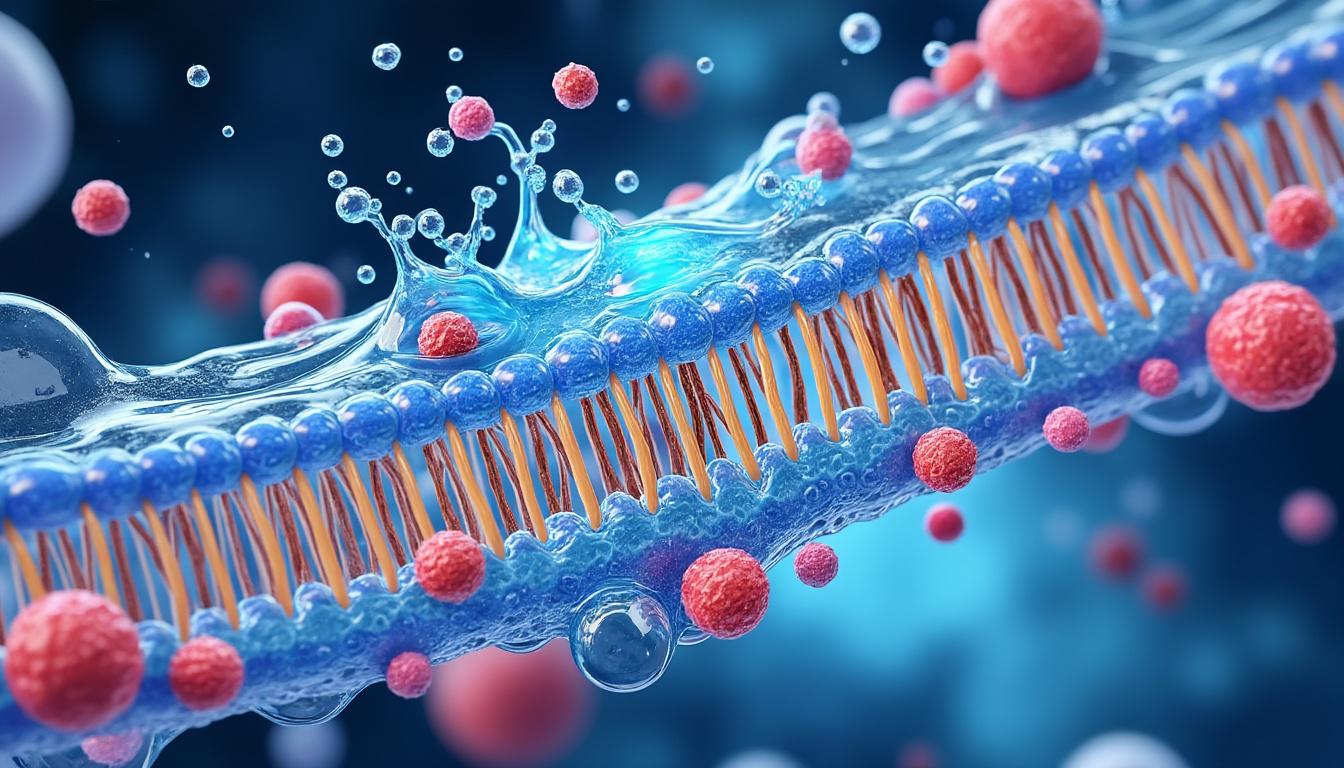
The Role of Solute-Solvent Interactions in Non-Colligative Phenomena
To appreciate the unique effects of non-colligative properties, one must delve into the specific molecular and intermolecular interactions that arise in chemical solutions. These interactions govern how a solute influences the physical attributes of the solution beyond particle numbers, affecting overall behavior.
Hydrogen bonding offers a classic example. When molecules capable of forming hydrogen bonds dissolve in water, their strong interactions with water molecules alter the solution’s viscosity, density, and even thermal behavior. For example, sucrose (table sugar) solutions are more viscous than equimolar solutions of other non-hydrogen bonding solutes. This difference originates from persistent hydrogen bonds between solute and solvent molecules, strengthening solution structure in ways that influence freezing point depression and boiling point elevation beyond simple colligative predictions.
Polar versus nonpolar solutes also illustrate how molecular polarity affects solution properties. Nonpolar solutes tend to disrupt the hydrogen-bonding network of water differently, giving rise to unique changes in solubility, vapor pressure, and even chemical reactivity. Such effects manifest particularly in organic chemistry contexts, where solvent polarity determines reaction pathways and product distributions, underscoring the importance of understanding intermolecular forces highlighted in organic chemistry literature.
A related phenomenon is ion pairing, where cations and anions in solution form transient complexes due to electrostatic attractions. This significantly influences the conductivity and osmotic pressure of electrolyte solutions and can lead to deviations from ideal colligative behavior. These subtle interactions exemplify how non-colligative properties are essential to explaining real solution behavior in systems frequently encountered in biology and industrial chemistry.
Overall, these solute-solvent dynamics compel chemists and chemical engineers to utilize a wider lens beyond colligative properties when designing solutions for desired outcomes, optimizing industrial processes, or elucidating biological system functions.
Detailed Insights into Boiling Point Elevation and Freezing Point Depression Beyond Colligative Theory
The classical colligative property relationships describe boiling point elevation and freezing point depression as phenomena driven entirely by solute concentration. According to the equation ΔTb = Kbm (where Kb is the ebullioscopic constant and m is molality), adding solute raises a solvent’s boiling point. Similarly, freezing point depression follows ΔTf = Kfm. While these formulas effectively capture general trends, they do not fully encompass non-colligative influences tied to solute chemical identity and interaction specifics.
For instance, a 1 molal aqueous solution of sucrose and a 1 molal solution of ethylene glycol both induce boiling point elevation. But quantitatively, their effects diverge somewhat because of differing hydrogen bonding strength and solute molecular size. Ethylene glycol modifies the hydrogen-bond network differently than sucrose, which impacts vapor pressure lowering and phase change temperatures distinctively.
Similarly, electrolyte solutions manifest even more complex behavior. The presence of ions may dramatically alter freezing points beyond what molality alone predicts due to ion pairing and hydration shells. Calcium chloride’s capacity to lower the freezing point more than typical salts exemplifies this phenomenon, where non-colligative aspects play critical roles in real-world applications such as road de-icing agents.
Such intricacies highlight why precise thermodynamic modeling incorporating molecular-scale details is foundational for accurate predictions. Understanding these non-colligative deviations also informs processes like antifreeze formulation and cryoprotection by leveraging unique chemical interactions rather than relying solely on particle count effects.
Osmosis and Osmotic Pressure: Interplay of Colligative and Non-Colligative Biological Effects
Osmotic pressure is a critical colligative property relevant to both chemistry and biological systems. It depends on the solute concentration, expressed by the formula Π = MRT, where Π is osmotic pressure, M is molarity, R is the gas constant, and T is the absolute temperature. This principle underlies essential physiological processes such as nutrient transport and cellular hydration.
However, biological membranes and complex biological fluids introduce non-colligative factors that significantly modify osmotic behavior. Cell membranes act as semipermeable barriers allowing selective solute and solvent passage, which means that osmotic flow depends on the size, charge, and chemical nature of solutes, not just their concentration. This specificity produces unique osmotic effects such as hemolysis in hypotonic environments or crenation in hypertonic ones, where the nature of solutes involved governs cellular response rather than particle number alone.
Furthermore, in medical contexts like intravenous infusion solutions, matching osmotic pressure to blood serum is essential not only quantitatively but qualitatively: solute chemical identity must be compatible to prevent adverse effects. For example, glucose-containing solutions have markedly different biological activities compared to saline, despite having similar osmotic pressures.
This nuanced osmotic interplay reflects how non-colligative properties must be considered alongside colligative ones, particularly when designing solutions for therapeutic, environmental, or industrial purposes where biological compatibility and unique molecular effects are paramount.
Applications and Practical Examples of Non-Colligative Properties in Contemporary Physical Chemistry
As chemistry advances toward 2026, the understanding of non-colligative properties and their unique effects becomes crucial in various sectors, ranging from pharmaceuticals to environmental technology. Real-world applications emphasize how these properties influence chemical solutions beyond textbook colligative predictions.
One domain heavily reliant on such knowledge is the formulation of antifreeze solutions used in automotive and industrial cooling systems. While colligative properties guide initial boiling point elevation and freezing point depression settings, fine-tuning solution performance requires accounting for solute molecular structure and its impact on viscosity and thermal conductivity.
In the pharmaceutical industry, drug solubility and bioavailability are directly tied to specific solute-solvent interactions rather than mere concentration. The ability of solutes to form hydrogen bonds or ionic interactions within biological fluids governs drug delivery efficiency and metabolic impact, as highlighted in recent studies on molecular pharmacokinetics.
Environmental chemistry also benefits from this knowledge in processes like reverse osmosis desalination. Pressures needed to overcome osmotic pressure are designed considering the chemical nature of salts dissolved in seawater, their ion pairing tendencies, and interaction with membrane materials. Optimization of membrane selectivity involves leveraging non-colligative effects to enhance performance and selectivity in water purification technologies.
To summarize, engaging with resources such as comprehensive chemistry masterlists and detailed analyses of colligative versus non-colligative behaviors is recommended for professionals aiming to master these phenomena. Additionally, academic portals provide in-depth explorations into how electrolyte and nonelectrolyte solutions display unique properties, enabling a more refined understanding of chemical solutions in practical contexts.
| Property | Dependence | Example | Implication in Chemistry |
|---|---|---|---|
| Boiling Point Elevation | Primarily on solute concentration (molality) | Elevation in boiling point in aqueous sucrose solution | Used in antifreeze formulation and cooking processes |
| Freezing Point Depression | Molality of solute particles | Lower freezing point in road salt solutions (e.g., CaCl2) | Applied in de-icing and preservation technologies |
| Vapor Pressure Lowering | Number of solute particles and solute identity | Lower vapor pressure in ethanol-glycerin mixtures | Relevant for drying processes and evaporation control |
| Osmotic Pressure | Depends on molarity and solute type | Physiological compatibility of intravenous solutions | Critical in medical treatments and biochemistry |
| Viscosity and Solution Density | Strongly on solute-solvent interactions | Increased viscosity in sugar-water solutions | Important in product formulation and chemical manufacturing |