
The identity property of addition stands as a fundamental cornerstone in mathematics, essential for building a strong foundation in basic arithmetic and enhancing number sense. This property allows numbers to retain their value when zero is added, thus maintaining mathematical balance and simplicity in computations. Especially as learners delve into more complex math concepts, recognizing the identity property’s role in preserving the inherent value of numbers becomes invaluable. Its applications range from elementary classroom settings to algebraic manipulations in advanced mathematics. Understanding this property equips students and practitioners alike to approach problem-solving with clarity and confidence.
Apart from its theoretical significance, the identity property shapes the way arithmetic operations are taught and understood, contributing to the logical structure that governs number operations. It links intuitively with real-life scenarios—for example, if a shopkeeper adds zero items to an inventory, the count remains unchanged, embodying this property in a practical context. Also, recognizing zero as the identity element in addition opens doors toward grasping other properties like the additive inverse and multiplicative identity, which play crucial roles in the broader number system. This concept is foundational and broadly applicable, influencing how equations are balanced and how expressions are simplified, making it a key stepping stone in mathematical literacy.
The identity property is more than just a simple rule; it embodies the logic underpinning many mathematical principles, offering a clear framework that supports learners across all levels. Whether working with whole numbers, negative values, fractions, or algebraic expressions, this property remains consistent and reliable.
In brief:
- The identity property of addition states that adding zero to any number results in the original number, unchanged.
- This property applies universally across whole numbers, integers, fractions, and complex numbers, highlighting zero as the additive identity element.
- It serves as a foundational principle in elementary math and continues to underpin advanced operations in algebra and beyond.
- The identity property ensures consistency in equations, aiding in variable isolation and problem-solving strategies.
- Its understanding enhances numerical intuition, promoting fluency in arithmetic and complex mathematical reasoning.
Core Understanding of the Identity Property in Addition
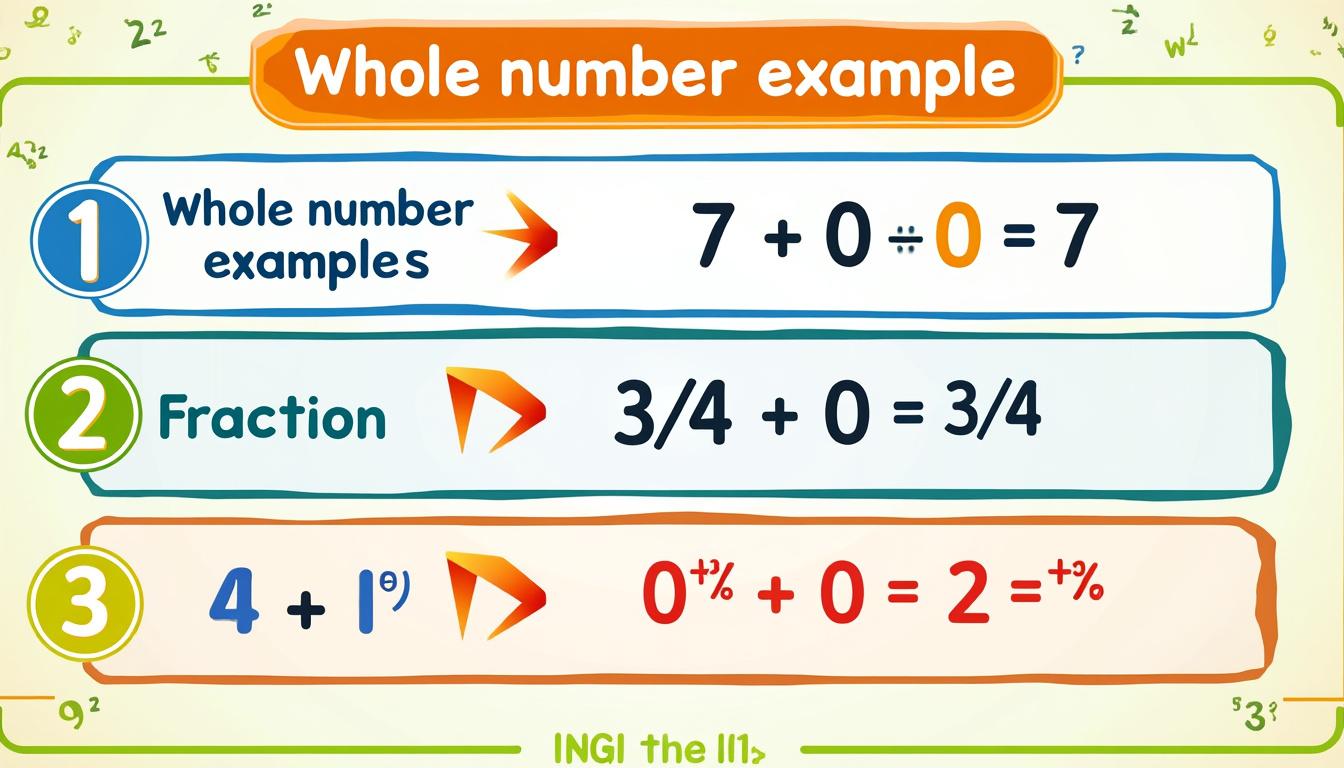
At its simplest, the identity property of addition is an elegant mathematical truth: adding zero to any number leaves the number unchanged. This principle, often introduced early in math education, helps solidify the concept of zero as the « additive identity. » In algebraic vernacular, for any number a, the equation a + 0 = a encapsulates this property clearly and succinctly.
This property might seem obvious, but its implications in arithmetic and algebraic structures are profound. Zero, as an additive identity, serves as a stabilizing element in computations and proofs, enforcing a rule that operations can be performed without altering fundamental values. This stability is crucial; without it, the simplification of expressions and the solution of equations could not reliably proceed.
Consider examples across different categories of numbers to highlight the property’s universal reach:
- Whole Numbers: When 0 is added to 38, the sum remains 38, i.e., 38 + 0 = 38.
- Negative Numbers: Adding 0 to -54 stays unchanged, thus 0 + (-54) = -54.
- Fractions: Even fractional values, such as ¼, maintain their value when combined with zero: 0 + ¼ = ¼.
This universality underlines why the property is sometimes interchangeably called the additive identity property. It’s not bound to a particular kind of number but is a blanket rule for the real numbers and beyond. This characteristic not only aids in computational ease but also underpins logical operations in more complex mathematical frameworks like vector spaces and modules.
Such properties are fundamental to grasp as they illuminate why numbers behave consistently regardless of their type or representation. For those building skills in elementary math, recognizing the role of zero as the identity element dramatically improves their comprehension and fosters a stronger intuitive grasp of numbers.
Application of the Additive Identity Property in Algebra and Equations
Moving beyond simple arithmetic, the identity property of addition plays a pivotal role in algebra, facilitating the manipulation of equations and expressions. Its power lies in preserving the value of algebraic statements when zero is added, a fact which is crucial for solving equations and simplifying expressions.
Imagine the linear algebraic expression 2x + 3. If we add zero to it, the expression remains unchanged: (2x + 3) + 0 = 2x + 3, demonstrating that the identity property holds in algebraic contexts just as in arithmetic. This principle reassures that the core components of algebraic formulas remain intact when zero is introduced, maintaining balance and predictability.
One of the most common applications is in solving linear equations. Consider the equation:
2x − 5 = 7
To isolate x, we add 5 to both sides:
2x − 5 + 5 = 7 + 5
which simplifies to 2x = 12. Here, adding zero is implicit because adding 5 and then subtracting 5 leads to the original, unchanged equation — a subtle use of the additive identity in maintaining equality. This application underlies much of algebraic manipulation and solution strategies.
The additive identity is also fundamental when dealing with polynomials. When zero polynomials are added to other polynomials, the original polynomial’s structure and value remain unchanged. For example, adding a zero polynomial to 3x² + 4x – 2 leaves it intact, a property critical for polynomial operations and simplifications.
Using the identity property of addition allows students and professionals alike to ensure equations stay balanced while making adjustments to isolate variables or simplify terms. This makes the identity property indispensable in both classrooms and practical problem-solving environments.
For a deeper exploration of how this concept integrates with algebraic understanding, refer to resources on the identity property’s role in algebra, which offer comprehensive explanations and examples.
Breaking Down the Importance of Zero as the Identity Element in Various Number Systems
Zero, as the identity element in addition, holds a unique and fundamental place across multiple numerical systems beyond simple whole numbers. The appreciation of zero’s role extends from integers to rational numbers, complex numbers, and even abstract algebraic structures, marking it as an essential figure in the realm of mathematics.
In the integer system, for example, adding zero to any positive or negative integer retains the integer’s value, strengthening the identity property consistency. For instance, -7 + 0 = -7 and 11 + 0 = 11. This consistency underscores the stability of integers under addition, a feature that is critical in numerous theoretical and applied mathematical contexts.
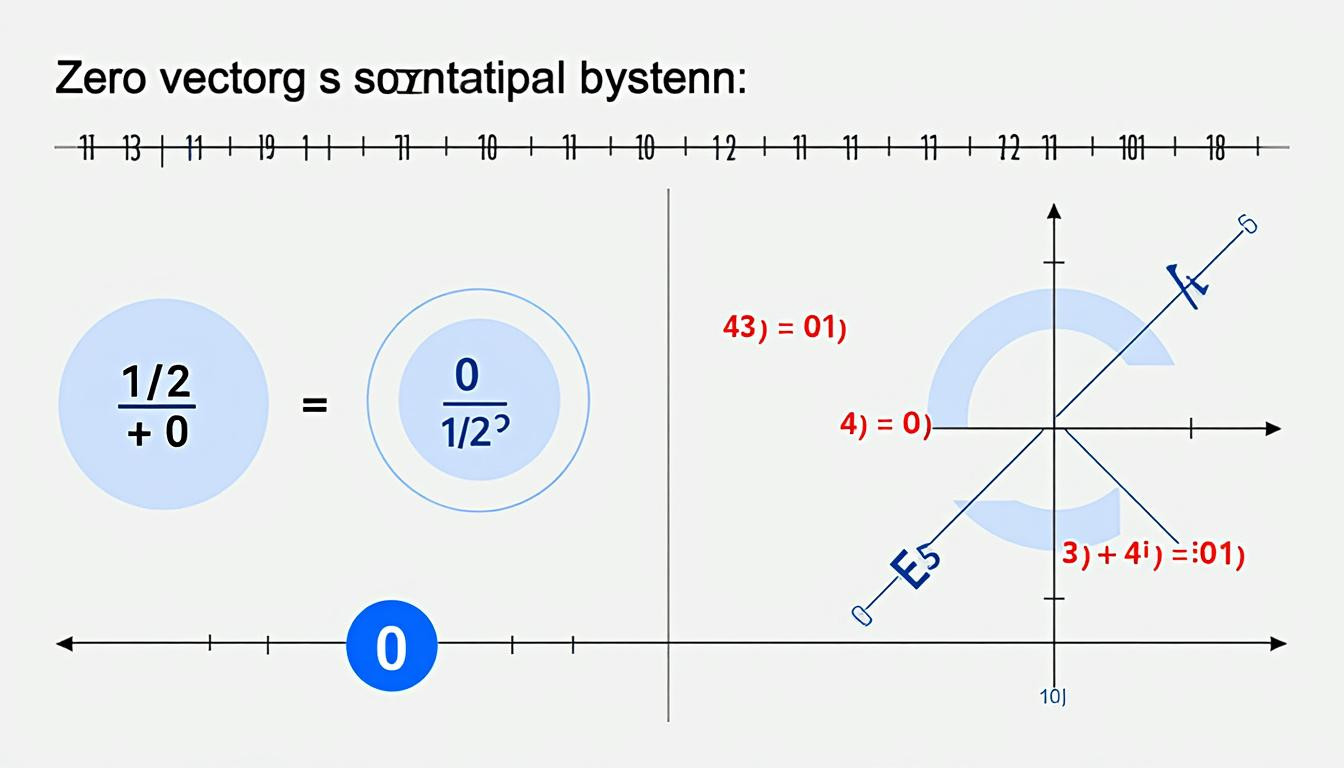
Within rational numbers, zero similarly does not alter value. Adding zero to fractions, whether positive or negative, yields the exact fraction, confirming the uniform application of the property. Moreover, in the complex number system, zero functions as the additive identity ensuring that, for any complex number z, z + 0 = z.
The stability zero offers also extends into more abstract algebraic contexts — such as vector spaces — where zero vectors serve as the additive identities, preserving the structure and integrity of the system.
Recognizing zero’s ubiquitous role as an additive identity deepens mathematical insight and aids learners in conceptualizing how different number systems interrelate. This realization reinforces the fundamental principle that zero is not just ‘nothing’; it is a powerful tool that sustains the arithmetic framework.
How Understanding the Additive Identity Enhances Math Learning and Problem Solving Skills
Grasping the identity property of addition is a gateway to developing robust mathematical skills and number sense. It provides learners a predictable rule, ensuring that specific operations yield consistent and expected outcomes—this predictability boosts confidence and reduces misconceptions, especially in elementary math education.
By deeply understanding that adding zero does not change a number, students can streamline calculations and recognize when zero plays a neutral or balancing role in others areas of math. This shines in mental math strategies where zero can be used to simplify problems, reinforcing efficient and intelligent approaches to computation.
Additionally, mastery of the identity property supports the understanding of more advanced concepts like the inverse properties and distributive property because all hinge on stable values during operations. It helps students spot patterns and relationships among numbers, fostering logical thinking and analytical skills that transcend mere memorization.
To encourage practice and solidify the understanding of additive identity, try solving problems identifying where addition of zero applies:
- What is the result of 63 + 0?
- If x + 0 = 42, what is the value of x?
- Which equation best demonstrates the additive identity property? 78 + 5 = 83 or 90 + 0 = 90?
- To find x, solve for 15 + x = 15. What property does this illustrate?
Engaging with these practical questions helps cement the theoretical principles, building a strong foundation for tackling higher-level math challenges.
Comparing the Identity Property of Addition with Other Fundamental Math Properties
The identity property of addition is part of a broader family of properties that govern arithmetic operations. Understanding its distinctions and relationships with other properties is crucial to developing a full grasp of elementary and advanced mathematical properties.
For instance, while the identity property of addition revolves around zero as the additive neutral element (a + 0 = a), the multiplicative identity property concerns the number one, which maintains a number’s value under multiplication (a × 1 = a). Both properties highlight neutral elements that preserve values but within different operations.
Moreover, this property complements the commutative property (which states that changing the order of addends does not change the sum) and the associative property (which allows regrouping of addends without changing the result). Together, these form a cohesive set of rules that ensure arithmetic consistency and facilitate problem solving.
Understanding these properties enriches learners’ awareness of the structure behind numerical operations and broadens their capability to manipulate, analyze, and innovate mathematically. To expand on these concepts in detail, visiting resources like those focusing on the properties of addition can be particularly enlightening.
| Property | Definition | Example |
|---|---|---|
| Identity Property of Addition | Adding zero to a number does not change its value. | 7 + 0 = 7 |
| Multiplicative Identity | Multiplying a number by one does not change its value. | 5 × 1 = 5 |
| Commutative Property of Addition | Changing the order of addends does not change their sum. | 4 + 3 = 3 + 4 |
| Associative Property of Addition | The way numbers are grouped does not affect their sum. | (2 + 3) + 4 = 2 + (3 + 4) |