
In 2026, as the real estate landscape continues to evolve, understanding property survey prices has become crucial for homeowners, developers, and investors alike. Land surveys underpin the foundation of property valuation and legal clarity, particularly in an era marked by fluctuating market trends and complex development projects. With inflation influencing operational costs and the introduction of advanced technologies enhancing survey methods, determining the actual costs of surveys involves deciphering a matrix of variables including parcel size, terrain, survey types, and regional pricing differences.
While traditional factors like acreage and accessibility still dominate costs, technological add-ons such as drone mapping and GNSS have reshaped the pricing landscape. Meanwhile, geographic variations contribute to a significant range in fees, with regions in the Northeast typically commanding higher survey prices than the Midwest or South. For property owners preparing for construction, dispute resolution, or market transactions, dissecting these cost factors and survey options is key to budgeting accurately and making informed decisions.
Key points to note about property survey costs in 2026:
- Survey pricing varies widely from a few hundred to several thousand dollars based on complexity and scope.
- Parcel size, topography, and accessibility are the primary cost drivers.
- Technological advancements provide more precise data but may increase costs through additional equipment fees.
- Regional market trends influence overall expense, with urban and high-demand areas typically more expensive.
- Understanding the different survey types helps tailor the service to specific real estate and property valuation needs.
Detailed Breakdown of Property Survey Prices and Cost Factors in 2026
In the current real estate market, property surveys remain foundational for accurate property valuation and legal certainty. Homeowners and developers seeking surveys typically encounter a pricing range from around $350 to upwards of $3,000, reflecting the type of survey, the parcel’s characteristics, and additional requirements.
Four main elements largely dictate the cost structure of a property survey:
- Parcel Size: Larger properties naturally demand more time and labor, pushing costs upward. For instance, a 0.25-acre residential boundary survey may range between $350-$500, while a 2-acre plot with topographic details can easily exceed $3,000.
- Terrain and Accessibility: Uneven, forested, or sloped land typically requires additional fieldwork and specialized equipment. This can increase labor hours and equipment necessities, directly inflating the invoice.
- Survey Type: Basic boundary surveys are the most cost-effective, whereas topographic and detailed boundary surveys involving monument recovery or flood zone analysis add significant expenses.
- Required Accuracy and Documentation: Legal descriptions, monuments, and plat submissions involve auxiliary tasks and municipal fees that reflect in the final price.
These elements combine in diverse ways depending on the property’s context. For example, a residential lot preparation survey in wooded terrain might fall between $400-$2,500, while specialized topographic surveys for commercial developments stretch from $1,000 to $5,000.
| Survey Type | Low Price Range | Average Price | High Price Range | Notes |
|---|---|---|---|---|
| Professional Boundary Survey | $350 | $1,000 | $3,000+ | Includes basic boundary or stakeout service |
| Residential Lot Preparation | $400 | $1,200 | $2,500 | Cost increases for wooded or uneven terrain |
| Boundary Survey for HOA or Title | $500 | $1,500 | $2,800 | Includes legal descriptions and monument recovery |
| Topographic Survey | $1,000 | $2,500 | $5,000 | Elevation data and site features included |
| Additional Services (e.g., utility locates) | $100 | $500 | $2,000 | Includes flood zone and encroachment reports |
Property owners should consider these variables carefully and collect multiple bids to ensure they receive competitive pricing. Batching surveys for adjacent parcels can offer economies of scale and reduce overall fees. For those unfamiliar with surveying intricacies, consulting detailed pricing guides can demystify costs and help streamline budgeting.

How Survey Types Impact Pricing and Scope in Real Estate Transactions
Understanding different survey types is vital in real estate, as each serves distinct purposes and incurs different costs. Basic boundary surveys identify property lines and confirm title boundaries, making them essential for purchases and minor construction projects. They are typically the most affordable, but their simplicity means they do not detail features like elevations or existing structures.
Topographic surveys provide detailed mapping of elevations, contours, and site features. These are often required for new construction, landscaping, or flood zone assessments. They can more than double the cost of a basic survey due to added complexity and equipment like GNSS and drone imaging.
Boundary surveys for Homeowner Associations (HOA) or title insurance purposes include precise legal descriptions and monument recovery, ensuring clarity and reducing dispute risks. These specialized services carry an extra price tag reflecting the added legal and technical work.
Other survey types might include subdivision surveys, ALTA/NSPS surveys for commercial real estate, and environmental assessments. The choice depends heavily on the property goals and compliance requirements. Selecting the appropriate survey type optimizes value and avoids unnecessary expenses.
For investors and developers, combining boundary surveys with topographic data and market insights offers an accurate foundation for property valuation and capital allocation. Inquiring about technology-driven survey pricing trends can help uncover new cost-efficient approaches.
Examples of Survey Types and Their Typical Uses
- Boundary Survey: Legal boundary confirmation, property purchase, simple construction permits.
- Topographic Survey: Land development, flood risk analysis, detailed engineering plans.
- ALTA/NSPS Survey: Commercial property transactions requiring lender and title insurance.
- Subdivision Survey: Land division for property development or resale purposes.
- Flood Zone Survey: Identifies floodplain boundaries to comply with insurance and zoning regulations.
Regional Variations and Market Trends Affecting Survey Prices in 2026
Survey prices fluctuate significantly nationwide due to regional economic dynamics, construction activity, and regulatory environments. For example, surveys conducted in the Northeast, where land is often scarce and values are high, tend to be priced 15% to 25% above the national average. This premium arises from higher labor costs, complex municipal requirements, and competitive demand.
Conversely, Midwest states frequently offer more affordable survey prices with lower overheads and less restrictive local regulations. However, terrain complexity—such as wetlands or forests—can still increase field hours and equipment needs, pushing costs upward.
The Western states fall into a mid-to-high pricing bracket, often due to geographic challenges such as steep slopes and the prevalence of mountainous terrain. In the South, more affordable market segments exist, but urban centers may still command pricing closer to national averages due to development pressures.
The impact of inflation in 2026 has also influenced the overall market: surveyors face rising equipment, labor, and permit costs. Moreover, survey professionals are increasingly adopting advanced technologies, which while offering precision, add initial investment costs that tend to reflect in customer pricing.
Understanding these regional disparities is fundamental when budgeting for surveys. Prospective buyers and developers should review local survey pricing via regional sources and tools like pricing trend analyses to anticipate variations linked to their location.
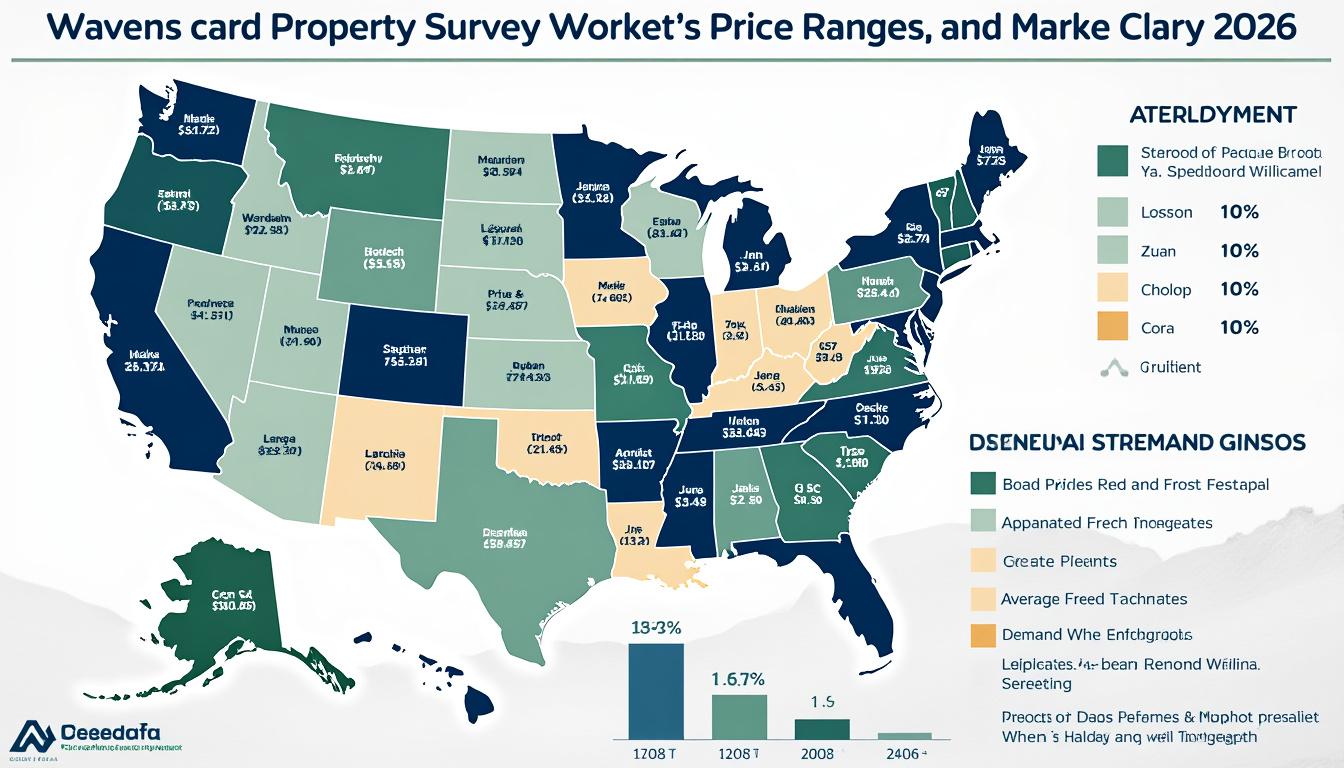
Summary of Regional Price Influences
| Region | Price Range vs National Avg | Key Factors |
|---|---|---|
| Northeast | +15% to +25% | High labor costs, dense urban settings, strict regulations |
| Midwest | -10% to -20% | Lower overhead, rural expanses, simpler regulatory requirements |
| West | +5% to +15% | Mountainous terrain, specialized equipment needs |
| South | -5% to +10% | Mixed urban and rural settings, moderate labor costs |
Ways to Manage Property Survey Costs and Maximize Value in 2026
Strategic planning is essential to manage property survey costs effectively in today’s real estate market. Given the wide range of pricing variables, property owners can employ several approaches to contain expenses while ensuring reliable surveying.
First, obtaining multiple bids from licensed surveyors introduces competitive pricing and highlights variations based on service scope. Transparency in defining the survey scope—including optional add-ons like topographic features or flood zone analysis—helps avoid unexpected charges.
Second, coordinating surveys across contiguous parcels can distribute fixed costs and achieve bulk savings, especially for developers managing subdivisions or multi-lot acquisitions. Furthermore, early scheduling can reduce premium fees related to urgent or expedited services.
Property owners should also stay informed about technological innovations. While tools like drones and high-precision GNSS increase costs initially, their efficiency gains can lower labor time and improve accuracy, contributing to overall project value.
Finally, leveraging online resources such as professional land survey cost calculators helps forecast expenses based on property characteristics and chosen survey types. This empowers budget-conscious parties to prepare mitigations or negotiate more effectively.
Tips for Saving on Property Surveys
- Solicit and compare multiple detailed quotes from reputable surveyors.
- Clearly define the required survey scope before commissioning services.
- Consider combining surveys for adjacent properties to reduce per-lot charges.
- Plan surveys ahead to avoid rush premiums and allow for competitive bidding.
- Explore technologically enhanced services for potential time and cost efficiencies.