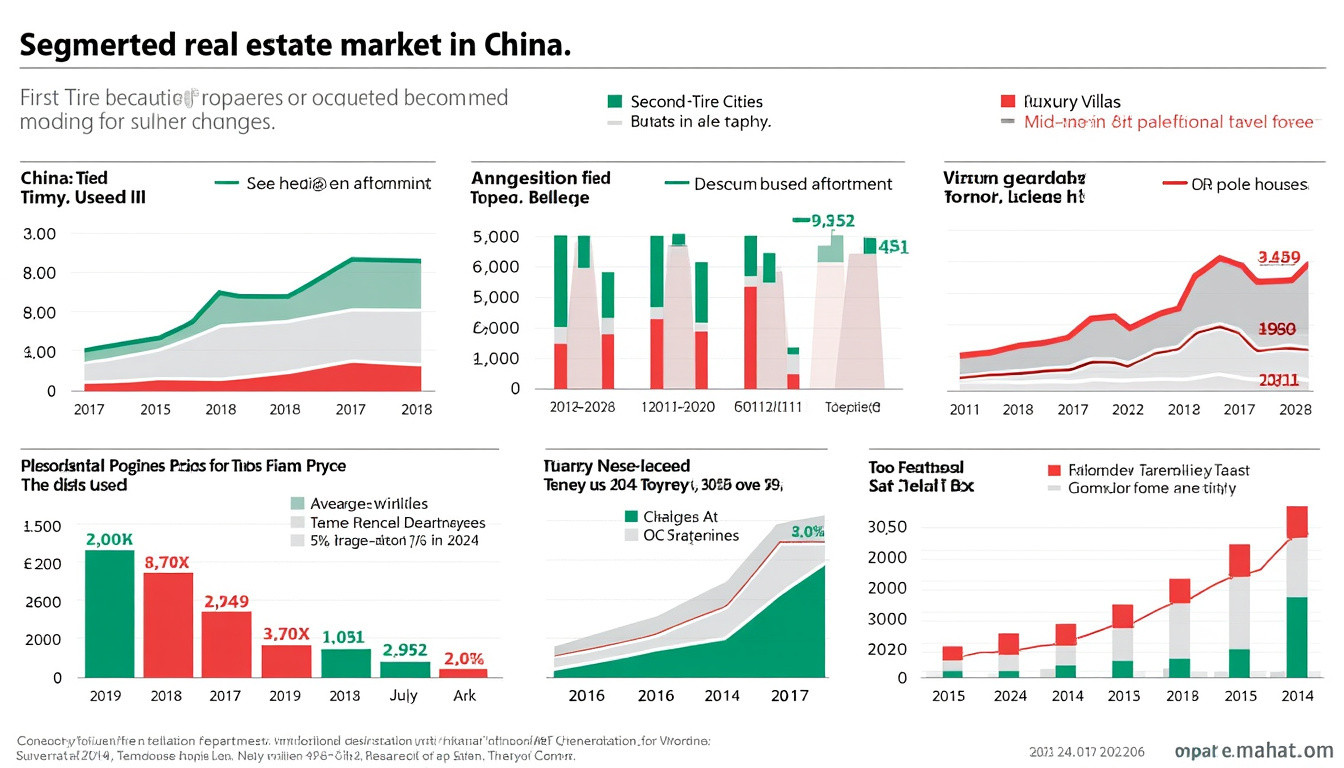
The recent AlphaWise China Property Survey unveils critical insights into the evolving landscape of China’s real estate market in 2025 and its expected trajectory into 2026. Despite a modest uptick in homebuyer sentiment, the overall sentiment toward property prices remains sober. Increasingly, homeowners show willingness to sell at a loss amid low purchase demand and unclear policy impact, reflecting deep-seated anxiety in the market. This extensive survey reveals divergent behaviors across city tiers, showing a stark contrast between robust new property pricing in central urban areas and a sluggish secondary market.
As China’s economic growth faces headwinds again in the latter half of 2025, market confidence teeters on the edge, foreshadowing a challenging environment for real estate stakeholders. The data sheds light on consumer behavior, highlighting a predominance of cautious buyers waiting for an ideal entry point and sellers ready to offload assets to alleviate financial pressure. This complex interaction between supply and demand, fueled by economic uncertainty and changing investment dynamics, forms the crux of this comprehensive market analysis.
Key Points in Brief:
- The AlphaWise survey shows a slight improvement in mid-term home price expectations but overall market sentiment remains weak.
- Urban hierarchies intensify market differences, with first-tier city confidence sinking below that of second-tier cities in some metrics.
- Sellers increasingly accept losses to exit the market faster, with a notable 56% willing to sell below purchase price.
- Buyer interest is tepid, with only a small fraction actively planning purchases within one year, reflecting prolonged cautious consumer behavior.
- The market’s future hinges on macroeconomic stabilization and release of pent-up demand, particularly from home upgraders rather than first-time buyers.
Decoding the Sentiment Shift in China’s Residential Real Estate Market
Understanding the sentiment behind housing trends is vital for grasping the broader economic impact on China’s property sector. The AlphaWise survey, conducted by Morgan Stanley’s proprietary research team, canvassed over 2,000 respondents nationwide in mid-2025, reflecting a nuanced shift in consumer behavior.
The data indicates that while optimistic expectations for property prices have nominally improved since April 2025—from 36% expecting price drops to 33%—this change is fragile and linked strongly to the temporary economic revival observed in the year’s first half. Caution dominates as many foresee potential reversals if economic pressures mount in later months. This guarded optimism is tempered by a lingering reluctance to enter the market, a key sign of overall low confidence.
Interestingly, the survey highlights a pronounced disparity of sentiment between different city tiers. First-tier cities, including Beijing, Shanghai, and Shenzhen, have experienced a surge in pessimism, with 50% of respondents anticipating falling prices. This is a striking statistic given first-tier cities historically command stronger demand and pricing stability.
In contrast, second-tier cities show slightly less negativity, though the difference is narrowing, signifying potential spillover effects. Analysts suggest that negative sentiment could propagate downward from first-tier urban centers, amplifying challenges in less mature markets. This reflects a broader pattern recognized in China’s property market analysis, where urban cores often set the tone for regional market confidence.
The polarized market is further evidenced by pricing trends in prime neighborhoods. For example, Shanghai’s Xuhui district recorded sales prices at unprecedented levels, with land auction prices hitting 200,000 yuan per square meter—a national peak. This contrasts sharply with underperforming secondary housing markets, establishing a bifurcated market environment. This phenomenon challenges investors to distinguish between short-term price corrections and long-term growth prospects, posing strategic decision-making complexities.

Seller Behavior Under Pressure: The Rise of Loss-Driven Sales
A critical takeaway from the AlphaWise survey is the evolving mindset of homeowners regarding asset liquidation. The proportion of sellers preparing to put their properties on the market within six months stands at 44%, a small decline from 47% recorded in April 2025. What is striking, however, is the steep increase in willingness to sell at a loss—from 43% previously to an alarming 56% in the latest figures.
This increasing readiness to accept losses speaks volumes about the pressures faced by property owners. Financial constraints, pessimistic future expectations, and a desire to mitigate ongoing holding costs drive many to “cut their losses.” About 42% of sellers are prepared to accept up to a 10% loss on their investments, while 12% tolerate discounts reaching 20%. A marginal 2% are in an urgent situation, aiming simply for rapid exit regardless of price.
This growing trend towards loss-driven sales reveals an important dimension of consumer behavior in the Chinese property market. It underlines the risk of downward pressure on prices as sellers compete to attract limited buyers, thereby potentially exacerbating market softness.
At the same time, seller behavior is not monolithic. A segment of financially stable owners appear to be withdrawing properties from sale, choosing to hold and wait for a market recovery. This dichotomy between “forced sellers” and “patient holders” creates a dynamic tension influencing liquidity and price movements.
Implications for Investors and Developers
For investors and developers, rising seller losses may herald opportunities to acquire assets at discounted prices but also signal caution regarding demand sustainability. Market participants must closely monitor these trends to balance risk and reward effectively. An informed approach guided by detailed market analysis, like that generated by the Alphawise team, is crucial for navigating this complex environment.
Buyer Sentiment and the Hesitation to Commit Amid Economic Uncertainty
The survey also delves deeply into homebuyer intentions, revealing a predominantly cautious consumer base. While 51% of respondents entertain the possibility of purchasing property in the future—a small increase over previous surveys—only a modest 16% feel “very likely” to act. Even fewer, approximately 3%, have firm plans to close a purchase within a year.
This cautious stance is largely attributable to uncertainty around income stability and borrowing capacity amidst fluctuating economic conditions. Many buyers are strategically delaying decisions, hoping to capitalize on potential price bottoms. Such “wait-and-see” attitudes prolong market sluggishness and inhibit volume recovery.
Another dimension influencing buyer behavior is demographic demand segmentation. The survey estimates that around 35% of prospective buyers are motivated by improvement demand—those seeking to upgrade from current homes—while rigid or first-time demand constitutes approximately 16%. This signals an important trend that could shape future investment and development focus, emphasizing the need for more attractive offerings targeted at improving households.
In a landscape where buyers remain hesitant, developers and real estate firms must innovate in product design and financing options to stimulate activity. Tailoring solutions to this sizeable group of upgrader buyers could unlock latent demand and help reignite momentum.
Structural Market Divides and the Path to Recovery
The AlphaWise China Property Survey highlights that short-term pressure in pricing and transaction volumes is unlikely to abate without macroeconomic stabilization. Market softness is especially acute in the secondary housing sector where oversupply coincides with tepid buyer interest.
Nonetheless, a cautiously optimistic scenario emerges when considering medium- to long-term prospects. Should China’s economy regain its footing and household incomes improve, a substantive recovery fueled by the release of improvement demand seems plausible. Policy adjustments, particularly easing credit conditions, are key catalysts potentially propelling this turnaround.
This raises strategic considerations for stakeholders, including timing investments and aligning development projects with shifting demand profiles. As highlighted by industry observers in several analyses, understanding and anticipating the divergent trajectories within housing trends is fundamental for navigating the Chinese market’s volatility.
| Market Segment | Key Feature | Current Trend | Outlook for 2026 |
|---|---|---|---|
| First-tier Cities | High Land Prices & Urban Core Demand | Price Decline in Secondary Market; New Developments Stable | Potential for Gradual Recovery if Economic Support Continues |
| Second-tier Cities | Emerging Investment Opportunities | Moderate Price Softening; Buyer Sentiment Improving Slightly | Likely to Follow First-tier City Trends with Lag |
| Secondary Housing Market | Oversupply Challenges; | High Seller Loss Acceptances; Weak Demand | Recovery Dependent on Economic Stability |
| Improvement Demand Segment | Upgrader Buyers Dominant | Rising Share of Market Interest | Key Driver for Market Rebound in Medium Term |
These emerging dynamics underscore the importance of a nuanced approach to investment and development, emphasizing data-driven strategies based on continually evolving survey data. For deeper insights and comprehensive reports, see in-depth property market reports and detailed analyses from AlphaWise surveys.