
Understanding Contra Costa property tax rates and payment deadlines is crucial for homeowners, investors, and real estate professionals navigating this vibrant California county. Nestled in the San Francisco Bay Area, Contra Costa County has witnessed remarkable growth in property values, making the comprehension of tax obligations essential. Property taxes serve as the lifeblood for funding local schools, infrastructure projects, and various municipal services that uphold community standards and quality of life. Given that property tax calculations hinge on assessed values and local tax rates, staying informed about assessment procedures and payment schedules can help property owners budget effectively and avoid costly penalties. This guide illuminates the complexities surrounding property assessments, tax rates, deadlines, and methods of payment in Contra Costa County, demystifying these elements for anyone involved in the local real estate market.
In Brief:
- Contra Costa property tax is primarily based on a 1% assessed value rate plus voter-approved special assessments.
- The county tax assessor determines property assessments annually, influenced by market values and any property improvements.
- Property tax payment deadlines are set twice yearly, with penalties for late payments escalating rapidly.
- Various exemptions, including the homeowners’ exemption, can reduce overall tax liability.
- Property owners have multiple convenient payment options: mail, in-person, phone, or online.
- Secured taxes relate to real estate, while unsecured taxes apply to business property and other personal assets.
- Tax delinquency can lead to liens, penalties, and potentially a tax sale, emphasizing the importance of timely payments.
Comprehensive Overview of Contra Costa Property Tax Rates and Assessment Processes
The foundation of property tax in Contra Costa hinges on the assessed value of a property, which the county tax assessor recalculates annually. This valuation sets the cornerstone for tax calculation by applying a base rate of approximately 1%, known statewide under California’s Proposition 13 framework. However, the effective tax rate often escalates when local voter-approved bonds, special assessments, and infrastructure financing fees are factored in. These can vary considerably across different Tax Rate Areas (TRAs) within the county, which means that two similar properties in the same city might face different tax obligations based on their location within distinct TRAs.
Property assessments occur with careful consideration of recent market sales and property improvements. For example, if a homeowner renovates or constructs additions, the assessor recalculates market value to include these enhancements, often resulting in increased tax liability. The assessed value itself is generally limited to a maximum annual growth rate of 2% unless there is a change of ownership or significant new construction. This cap offers some predictability in tax planning despite fluctuations in the real estate market.
Understanding the distinction between secured and unsecured property taxes is vital. Secured taxes are tied to real property — land and structures — and are placed as liens, enforceable against the property. Conversely, unsecured property taxes apply mainly to business equipment, fixtures, or personal property not attached to real estate. An example would be the tax on commercial machinery within Contra Costa County. Checking the tax bill’s top section and parcel numbers helps owners identify their tax category and obligations.
Those interested in detailed municipal breakdowns and specific tax rate computations in Contra Costa may find additional resources at Anderson Business Advisors’ Contra Costa County Property Tax Overview and the Contra Costa County official Property Tax page, which offer granular data and updates.

How to Accurately Calculate Your Property Tax in Contra Costa County
Calculating property tax in Contra Costa County requires applying the local tax rate to the assessed value of the property, then adding any additional special assessments. The essential formula involves:
- Determining the property’s assessed market value, generally pegged to the latest sale price or reevaluation after improvements.
- Applying the general 1% tax rate mandated by California law (Prop 13).
- Adding voter-approved direct assessments, bonds, and special fees, which can contribute anywhere from 0.1% to 0.3%, varying by jurisdiction.
To illustrate, consider a single-family home recently assessed at $600,000. The base tax would be 1% of that, equating to $6,000 annually. For many homeowners, additional assessments for schools, infrastructure, and public safety bonds add between $600 and $1,800 more, resulting in a total tax bill ranging roughly from $6,600 to $7,800.
It’s critical to note that while the county sets the fundamental tax framework, actual tax payments are influenced by the specific location of your property within the wider Contra Costa County region. Two nearby homes, one in Walnut Creek and another in Pittsburg, may face a noticeable difference in tax bills due to varying voter-approved levies specific to their taxing districts.
Property owners can estimate their taxes by dividing their annual tax bill by the assessed value, or by using online calculators such as those available at HonestCasa’s Contra Costa Property Tax Guide. These tools incorporate current tax rates and assessments to provide personalized estimates. For investors evaluating rental properties or house flipping opportunities, understanding precise tax liabilities plays a pivotal role in financial forecasting and profitability analysis.
Key Payment Deadlines and Methods for Contra Costa Property Taxes
Understanding the timelines for tax payments is essential to avoid penalties. Contra Costa County property tax bills are mailed out annually, typically by the end of November. Payments are split into two installments, aligning with California’s statewide rules:
- First installment: Due November 1st, with the final deadline on December 10th. Payments made within this window avoid penalties.
- Second installment: Due February 1st, with payments becoming delinquent after April 10th if unpaid.
Property owners can pay both installments at once during the first payment period if preferred. It’s important to keep this schedule in mind, as late payments accrue a 10% penalty plus a $30 administrative fee initially. Thereafter, a 1.5% monthly penalty starts accruing from the second month of delinquency, escalating the total owed by substantial margins over time.
Several payment options accommodate different preferences and convenience levels:
- By mail: Using the address printed on the tax bill.
- In person: At the Contra Costa County Administration Building in Martinez.
- By phone: Calling 925-957-5280 with your Assessor’s Identification Number.
- Online: Through the county’s secure website at Contracosta.ca.gov Property Tax Portal.
Credit card payments incur a 2.5% convenience fee, while debit card payments do not. Real estate investors, often handling multiple properties, find the online portal particularly efficient for managing diverse payment deadlines and records.
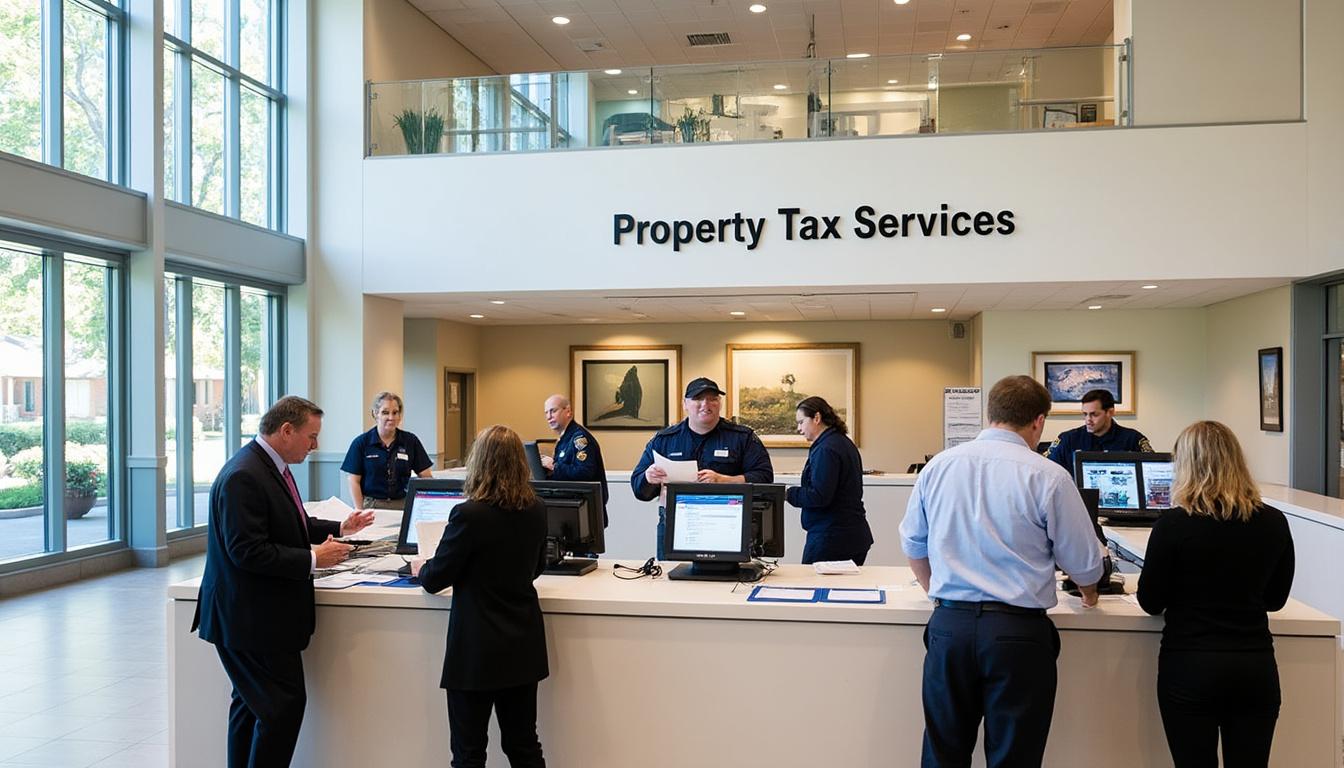
Consequences of Late Property Tax Payment and Processes for Delinquent Accounts in Contra Costa County
Failing to meet payment deadlines triggers a series of escalating fees and legal consequences. Upon the initial delinquency, a 10% penalty charge plus a $30 administrative fee is added immediately to the outstanding balance. One month after this, a 1.5% monthly penalty fee starts accumulating until the balance is fully paid. For instance, a property with a $7,000 tax bill could see penalties rise by hundreds of dollars within months of nonpayment.
Unresolved delinquency eventually leads to the property entering tax-default status. Contra Costa County has the authority to initiate a tax sale process after five consecutive years of default, potentially transferring ownership to satisfy unpaid taxes. However, property owners typically have a statutory redemption period to settle back taxes, penalties, and fees to stop this action.
Tax collectors may exercise various collection methods including:
- Placing liens on the property, impacting refinancing or sale possibilities.
- Initiating legal proceedings that could lead to foreclosure.
- Seizure and sale of personal property under specific circumstances.
Property owners who anticipate difficulty in fulfilling the tax payment deadline are strongly advised to contact the tax collector’s office proactively. Sometimes alternative payment arrangements can be negotiated to mitigate financial strain.
Strategies and Exemptions to Reduce Contra Costa Property Tax Liability
While property tax is a significant expense for homeowners and real estate investors in Contra Costa County, various avenues exist to reduce this financial burden legally. The Homeowners’ Exemption is among the most accessible relief programs, allowing eligible property owners to deduct $7,000 from the assessed value of their primary residence, which translates into a $70 reduction in annual taxes. Eligibility requires that the home is the owner’s principal residence as of January 1st, and new property owners typically receive applications for this exemption automatically.
Another method for reducing taxes involves appealing the assessed value if market conditions suggest a decline in property value. Property owners can request a reassessment or file a formal appeal between July 2nd and November 30th. Such appeals undergo a hearing process where evidence of lower market value can result in decreased assessed valuation and a corresponding tax decrease.
Special exemptions exist for seniors, disabled veterans, nonprofit institutions, and other qualifying categories. California’s Proposition 19 also provides relief by enabling certain seniors and others to transfer their tax base to a new home under specific conditions, an important consideration for aging homeowners planning to relocate.
| Exemption Type | Eligibility Criteria | Tax Benefit |
|---|---|---|
| Homeowners’ Exemption | Owner-occupied primary residence | Reduces assessed value by $7,000 |
| Senior Citizen Exemption | Age 62 or older with income limits | Varies, including possible postponements |
| Disabled Veteran Exemption | Veterans with qualifying disability rating | Significant assessed value reduction |
| Proposition 19 | Seniors, disabled persons, wildfire victims | Transfer of tax base to new residence |
Understanding these exemptions and the application process provides both homeowners and investors with tools to manage property tax expenses effectively. For more detailed guidance, property owners may explore additional resources such as the Renée White Team’s Contra Costa Property Tax Guide, which offers comprehensive insight and application assistance.