
As Broward County prepares for the fiscal year 2026, property owners face a landscape of evolving property taxes that threaten to reshape the financial commitments of homeowners across the region. New proposals signal significant savings for individuals, yet herald substantial revenue shortfalls for local governments tasked with maintaining essential community services. Understanding these complex changes is crucial for residents seeking to navigate their property assessments, anticipate tax payments, and grasp the broader implications on municipal budgets and public amenities. The upcoming year promises both relief and challenge, highlighting the intersection of tax policy, homeowner benefits, and the sustainability of government funding in Broward County.
Key takeaways for homeowners and stakeholders:
- Proposed tax reforms could reduce individual property tax bills by thousands of dollars, easing financial burdens.
- Collective revenue losses for Broward’s county and municipalities may surpass $1.4 billion, risking vital service cuts.
- Tax rate adjustments and expanded exemptions vary significantly among communities based on property values and local tax bases.
- Local governments rely heavily on property taxes, especially for funding public safety and infrastructure.
- State-level political debates around property taxes create uncertainty regarding future tax deadlines and payment structures.
Comprehensive Overview of Broward County Property Taxes and Tax Rates in 2026
Broward County’s property tax environment in 2026 is shaped by a series of proposals aimed at overhauling how taxes are assessed and collected on residential properties. At the heart of these reforms is a proposal to eliminate nearly all property taxes for owner-occupied homes with homestead exemptions, except for school district taxes. This plan intends to provide significant financial relief to homeowners but generates concerns about the feasibility of funding public services given the resulting loss of revenue.
Tax rates continue to be a focal point in regional discussions. The county’s millage rate—a critical multiplier used to calculate property taxes—has been adjusted slightly downward for the fiscal year 2026, currently set around 5.6658 mills, reflecting an attempt to reduce tax burdens amid rising property values. Yet, paradoxically, Broward homeowners are witnessing rising total tax bills despite lower millage rates, largely due to increased property assessments spurred by the real estate market’s strong momentum.
The effective tax rate hovers near 0.94% to 1.08% of a property’s assessed value, varying according to precise location and community-specific factors. For a median-valued home approximately worth $414,600, homeowners can expect to pay around $3,890 annually in property taxes, although differential impacts exist between cities like Fort Lauderdale, Pembroke Pines, and smaller residential towns.
Significantly, property value assessments conducted by the county’s Property Appraiser’s office form the basis for tax calculations. These assessments are pivotal as they determine the taxable value after exemptions and influence the ultimate tax payment homeowners owe. Increases in property valuation often mean that even with decreased tax rates, bills may rise, prompting concerns among residents about predictability and housing affordability.
In addition to the primary property tax, there are various tax exemptions available that can alleviate the burden for qualifying homeowners—such as senior exemptions, disability exemptions, and the homestead exemption itself. The proposed reform further enhances these relief mechanisms by introducing additional exemptions, including a proposed 25% homestead exemption on assessed values, which could notably decrease taxable amounts.
Timely awareness of tax deadlines remains essential, especially as new amendments might influence due dates or payment options. Homeowners are encouraged to review their assessment notices carefully, consult official sources like the county’s property tax calculator, and stay abreast of state legislative developments impacting tax rates, exemptions, and overall payment schedules.

Financial Impact on Homeowners: Savings Versus Burdens
Homeowners in Broward County stand poised to see significant tax savings if the proposed tax reforms are enacted. Analyses indicate that the median residential property owner could save approximately $2,421 in the first year, with savings varying widely by community. For example, residents in Fort Lauderdale might enjoy savings nearing $2,929, while homeowners in predominantly residential affluent areas like Parkland could reduce their tax bills by as much as $6,913.
These savings are particularly meaningful amid ongoing discussions about rising living costs throughout Florida. However, the projected reductions are not uniform. In cities with higher commercial property proportions, such as Pembroke Park, savings may be minimal—estimated around $507—because commercial properties are excluded from these new exemptions.
Moreover, the interplay between rising property values and adjusted exemptions means many homeowners must closely track their property assessments and exemption qualifications. For families and retirees eligible for senior or disabled exemptions, the reforms further extend targeted relief, with some proposals allowing exemptions exclusively for homeowners over 65, potentially saving such owners around $1,128 annually.
Despite these benefits, individual savings come with a catch. Broward County’s extensive network of affordable housing developments, rental properties, and mixed-use buildings means that non-residential property taxes may increase if local governments attempt to offset revenue losses. This consequence risks passing additional costs onto renters and commercial tenants, possibly influencing the wider housing market and economic environment.
Homeowners also face a complex calculation in balancing immediate tax relief with the risk of diminished local government services. Areas with higher property taxes support superior public amenities, from enhanced park facilities to efficient emergency response units. As such, homeowners must weigh the trade-offs between lower tax payments and the potential for budget-driven cuts in services they rely on daily.
The Consequences of Property Tax Revenue Loss on Broward County’s Local Governments
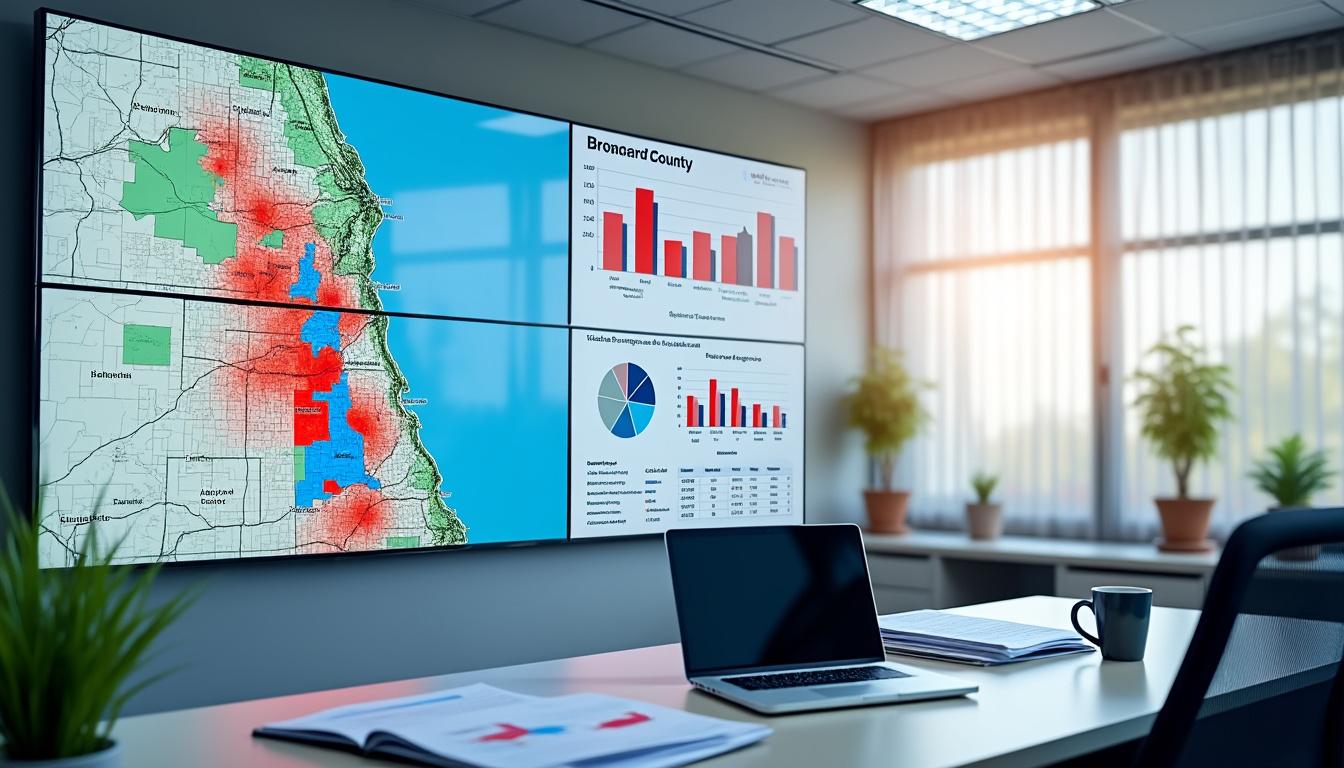
While homeowners may benefit from reduced property tax bills, local governments confront a staggering shortfall in revenue sources essential to fund day-to-day operations and strategic initiatives. Proposed changes could slash property tax income by over $1.4 billion across Broward’s municipalities in the first year, translating to roughly one-third of county government property tax revenue.
Municipal leaders like Adam Reichbach, president of the Broward County City Managers Association, emphasize that property tax revenue underpins nearly half of the general fund budgets for cities across the county. This fund supports critical public safety services, including police, fire-rescue, emergency response, and 911 operations. Strikingly, law enforcement alone accounts for an average of 55% of these budgets, meaning these departments often require funding exceeding total property tax revenue in many municipalities.
The uneven distribution of tax losses accentuates disparities between communities. For instance, Parkland faces an estimated $28.2 million revenue drop, representing over 75% of its property tax income, potentially crippling its ability to provide services. Conversely, Pembroke Park loses a marginal $142,000, just 1.3% of its revenue, owing to its commercial property base. Other cities like Cooper City and Southwest Ranches confront losses exceeding 60% of their property tax revenues.
Given this fiscal pressure, local officials grapple with urgent and difficult choices. Tough-budget decisions may include cutting public amenities, increasing service fees, or seeking alternative revenue sources. These scenarios risk diluting the quality of life that residents expect and could affect everything from infrastructure maintenance to community programs.
Some proposed constitutional provisions attempt to safeguard law enforcement funding, but the mechanics of these protections are vague, leaving unanswered whether local governments will balance these requirements with shrinking budgets or require state assistance.
Evaluating the Political and Legislative Landscape Shaping Broward Property Tax Changes
The property tax overhaul proposals have sparked intense debate in Tallahassee, where lawmakers face the difficult task of balancing taxpayer relief with public service funding sustainability. The Florida Legislature’s process requires a supermajority vote to place tax amendments on the November 2026 ballot, and a 60% referendum approval for enactment, adding political complex layers to this fiscal issue.
Republican lawmakers have generally supported aggressive tax reduction measures, aiming to deliver immediate financial relief to homeowners through multiple proposals ranging from eliminating taxes on owner-occupied residences to enhancing homestead exemptions. Conversely, Democrats express caution, warning of the risk these proposals pose to community services without clear plans to replenish lost revenue.
This tension manifests in fragmented proposals that, if simultaneously approved, create conflicting policies—such as immediate versus phased elimination of taxes on homesteaded property. Some legislators argue that confusing ballots may jeopardize passage altogether, while others view any reform as preferable to maintaining the current tax structure.
The uncertainty surrounding whether the state will offset local revenue losses compounds concerns. If not, local governments might resort to increasing taxes on commercial and non-owner-occupied residential properties or hike service fees, indirectly impacting renters and business owners.
Voices like Broward Property Appraiser Marty Kiar and representatives including Democrat Fentrice Driskell emphasize the long-term consequences of precipitous tax cuts without balanced offsets. They underscore the significance of this decision for Broward’s social fabric, economic health, and community resources.
Homeowners and local officials alike remain glued to developments, cognizant that federal, state, and local government interplay will decisively influence property tax structures, assessment methods, and payment requirements in 2026 and beyond.
Strategies for Homeowners to Navigate Broward County Property Taxes in 2026
In light of the complex changes ahead, Broward County homeowners can adopt several strategies to manage their tax obligations effectively and mitigate unexpected liabilities. First, staying informed about the evolving legislative environment and how proposed amendments might alter property tax calculations is paramount.
Regularly reviewing property assessments and contesting any perceived inaccuracies can prevent overpayment. Utilizing online resources such as the county’s official property tax calculator ensures that homeowners can estimate tax payments based on the latest tax rates and assessed values, helping with accurate budgeting.
Homeowners should also verify their eligibility for existing and newly introduced tax exemptions. Seniors, veterans, and disabled residents often qualify for additional reliefs that can substantially reduce tax burdens. Moreover, those planning to buy or sell properties should consider portability provisions allowing savings from one home to transfer to another, minimizing tax increases.
Understanding local tax deadlines and payment options remains essential to avoid penalties and interest charges. Early communication with county tax offices and access to digital payment portals can simplify transactions and improve compliance.
Finally, homeowners may want to engage with local government and community forums to voice concerns or advocate for balanced tax policies that sustain necessary municipal services without imposing excessive financial strain.
| Strategy | Description | Benefit |
|---|---|---|
| Regular Assessment Review | Verify property value and appeal if necessary | Avoid overpaying taxes due to assessment errors |
| Use Online Calculators | Estimate taxes using updated rates and values | Plan finances accurately with forecasts |
| Check Exemption Eligibility | Apply for all available tax reliefs | Reduce taxable property value and tax owed |
| Track Payment Deadlines | Ensure timely tax payments without penalties | Maintain good standing with tax authorities |
| Engage with Local Officials | Participate in forums and advocate for fair policies | Influence tax policies supportive of community needs |
Homeowners who take proactive steps not only safeguard their financial interests but also contribute to a well-informed public dialogue about property tax policies impacting Broward County in 2026.